

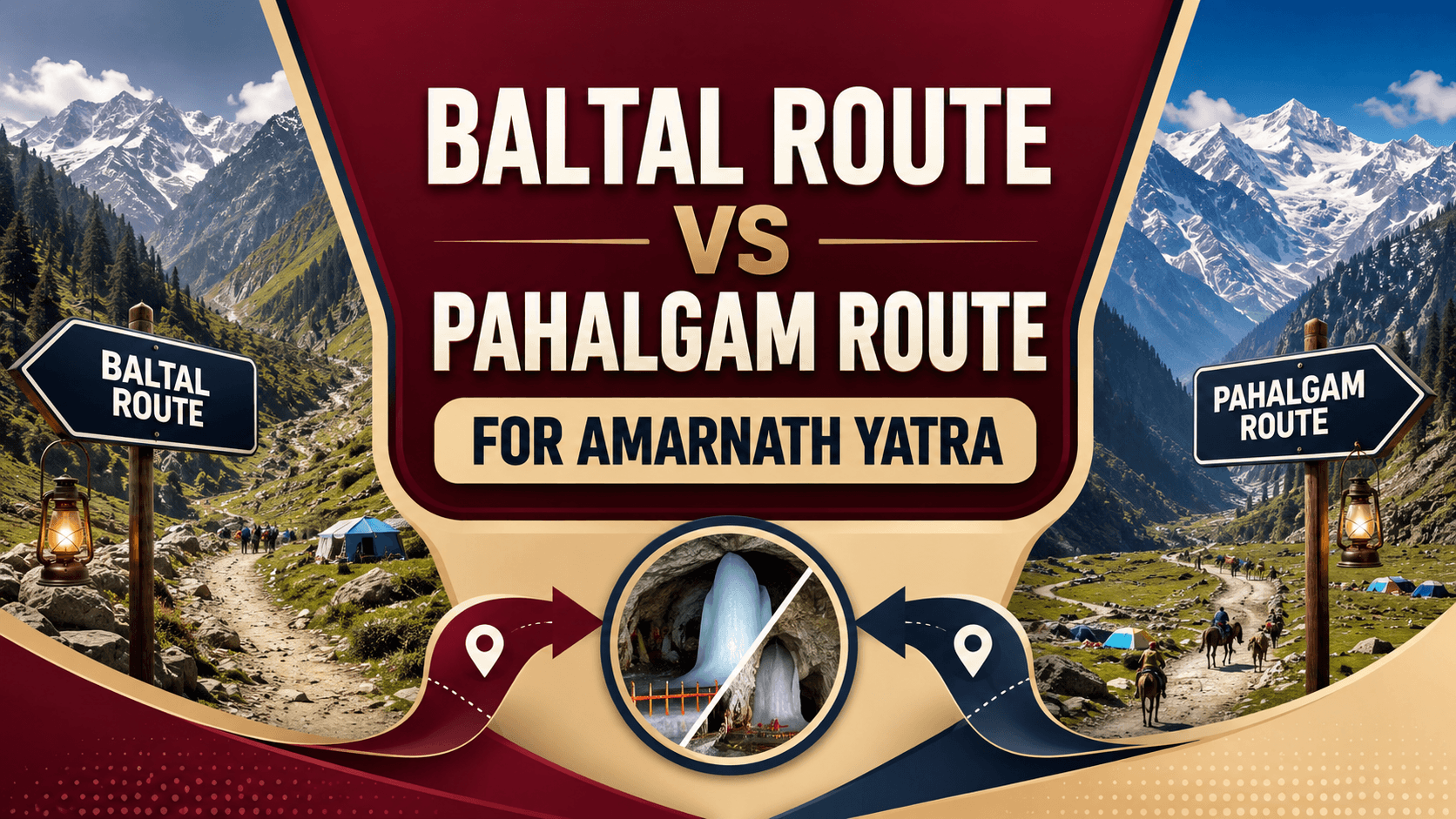
Baltal vs Pahalgam Route for Amarnath Yatra: Which Route Is Better?
Choosing the right trekking route can make a major difference to your Amarnath Yatra experience. The two main options are the Baltal route and the traditional Pahalgam route, and each has its own advantages. This guide to Baltal vs Pahalgam Route compares trek distance, difficulty, scenery, duration, camping options and overall experience to help you select the route that suits your travel plans.
For pilgrims planning an Amarnath pilgrimage in 2027, understanding the route before booking is especially useful. The right choice depends on your fitness level, available time, preference for a scenic journey and whether you want a shorter or more gradual trekking experience.
Baltal vs Pahalgam Route: Quick Comparison
The Baltal route is generally preferred by pilgrims who want to reach the Holy Cave through a shorter trekking path. The trek from Baltal to the Holy Cave is approximately 14 km one way. However, it is considered a demanding route because the trail includes steep sections and significant ascents and descents.
The Pahalgam route is the traditional and longer option. The trek begins from Chandanwari and continues through important locations such as Pissu Top, Sheshnag and Panjtarni before reaching the Holy Cave. The trekking distance from Chandanwari to the cave is approximately 32 km, making it considerably longer than the Baltal route.
The Shrine Board describes the Baltal trail as narrower and steeper in places, while the Pahalgam route offers a more gradual and scenic pilgrimage experience.
Baltal Route for Amarnath Yatra
Trek Distance and Difficulty
The Baltal route covers around 14 km from the base area to the Holy Cave. Because of its shorter distance, many pilgrims consider it convenient when they have limited time. However, shorter does not necessarily mean easier.
The route has steep climbs and descents, and completing the journey to the cave and returning to Baltal on the same day requires strong physical stamina. For fit trekkers, this can be an efficient way to complete the pilgrimage without spending several nights on the trekking trail.
Best Features of the Baltal Route
The biggest advantage of Baltal is its shorter trekking distance. It can be suitable for pilgrims who want to minimize the number of trekking days and spend more time at other destinations in Kashmir.
Ponies and palkis may also be available for pilgrims who require assistance, subject to official arrangements and prevailing Yatra rules.
The route is particularly attractive to experienced trekkers who are comfortable with steep terrain and longer walking hours in a single day.
Pahalgam Route for Amarnath Yatra
Trek Distance and Difficulty
The Pahalgam route is the traditional route and provides a longer pilgrimage experience. The journey generally starts from Chandanwari, after reaching the Pahalgam area by road.
Important stages include Pissu Top, Sheshnag and Panjtarni. The route eventually reaches the Holy Cave after crossing high-altitude terrain. Because the trek is longer, pilgrims usually divide the journey into multiple stages rather than attempting the entire route in one day.
This makes the Pahalgam route a good option for travellers who want to experience the journey itself rather than focusing only on reaching the shrine quickly.
Scenic Experience
One of the strongest reasons to choose Pahalgam is the scenery. The trail passes through mountain landscapes, valleys, streams and high-altitude surroundings. Sheshnag and Panjtarni are among the memorable locations associated with this traditional pilgrimage route.
For photographers, nature lovers and pilgrims who prefer a slower journey, the Pahalgam route can offer a more immersive experience.
Baltal vs Pahalgam Route: Which Is Easier?
The answer depends on what you mean by easier.
If easier means shorter in distance and potentially quicker to complete, Baltal has an advantage. Its approximately 14 km trek is much shorter than the traditional Pahalgam route.
If easier means having more time to adapt to the altitude and dividing the trek into stages, Pahalgam can be more comfortable for some pilgrims. The longer route provides a traditional multi-stage trekking experience, although it also requires more time and endurance.
High altitude should not be underestimated on either route. The Holy Cave is located at a high elevation, and weather conditions can change quickly. Pilgrims should prepare physically and follow the latest health and safety requirements issued for the Yatra.
Which Route Is Better for an Amarnath Trek Package 2027?
The best route for an Amarnath Trek Package 2027 depends on your itinerary and physical comfort.
Choose the Baltal route if you:
- Have limited time for the pilgrimage
- Prefer a shorter trekking distance
- Are comfortable with steep climbs and descents
- Want to complete the trek in a shorter timeframe
- Prefer spending additional time exploring Kashmir
Choose the Pahalgam route if you:
- Want the traditional Amarnath Yatra experience
- Prefer a longer and more scenic trekking journey
- Have sufficient time for a multi-stage pilgrimage
- Want to experience locations such as Sheshnag and Panjtarni
- Prefer spreading the physical effort across multiple days
For travellers looking for a structured pilgrimage itinerary, an Amarnath Trek Package 2027 can make planning accommodation, transportation and the overall Yatra schedule more convenient.
Baltal vs Pahalgam Route for Families and First-Time Pilgrims
Families and first-time pilgrims should avoid choosing a route based only on distance. Fitness, age, altitude tolerance and previous trekking experience are important factors.
The Baltal route may appear attractive because it is shorter, but its steep sections can make it physically demanding. The Pahalgam route is longer, yet its staged journey may suit travellers who prefer a slower pace.
Older pilgrims or anyone with concerns about trekking should review the latest official eligibility, health and assistance requirements before planning their journey. Route access, registration rules, medical requirements and available services can change from one Yatra season to another.
What Should You Consider Before Choosing a Route?
Before deciding between the two routes, consider your total holiday duration. If your itinerary is short, Baltal may fit more easily into your schedule. If you have additional days and want a traditional pilgrimage experience, Pahalgam can be more rewarding.
Your fitness level is equally important. Both routes involve high-altitude trekking, so preparing with regular walking and endurance exercises before the journey is advisable.
Weather is another key consideration. Mountain weather can change rapidly, and route conditions may vary during the Yatra season. Always follow official instructions and current route advisories rather than relying solely on previous travellers’ experiences.
For 2027, pilgrims should also verify the official registration process, route allocation, medical requirements, permitted services and Yatra dates when the authorities release the applicable guidelines.
Baltal vs Pahalgam Route
There is no single winner in the Baltal vs Pahalgam Route comparison because the better option depends on your priorities. Baltal is the practical choice for pilgrims who want a shorter trek and have the fitness to handle a steeper trail. Pahalgam is better suited to those who want the traditional, longer and more scenic Amarnath pilgrimage experience.
If speed and shorter trekking distance are your priorities, consider Baltal. If scenery, traditional stages and a more immersive journey matter more, Pahalgam may be the better choice. Whichever route you select for your Amarnath Trek Package 2027, plan early, prepare physically and check the latest official Yatra guidelines before departure.
FAQs
Is the Baltal route shorter than the Pahalgam route?
Yes. The Baltal trek to the Holy Cave is approximately 14 km one way, while the traditional Pahalgam route is approximately 32 km from Chandanwari to the Holy Cave.
Which Amarnath route is more scenic?
The Pahalgam route is generally preferred by travellers seeking a longer scenic experience. It passes through notable locations including Sheshnag and Panjtarni and offers extensive mountain scenery.
Is the Baltal route suitable for first-time trekkers?
It can be suitable for physically fit first-time trekkers, but the shorter distance does not make it effortless. The route has steep sections, so proper preparation is important.
Which route should I choose for a 2027 Amarnath Yatra?
Choose according to your fitness, available time and preferred experience. Baltal is better for a shorter trek, while Pahalgam is better for a traditional, longer pilgrimage journey.
Can route rules change for Amarnath Yatra 2027?
Yes. Registration procedures, medical requirements, route access, accommodation and other Yatra arrangements can change between seasons. Always check the latest official guidelines before travelling.
