

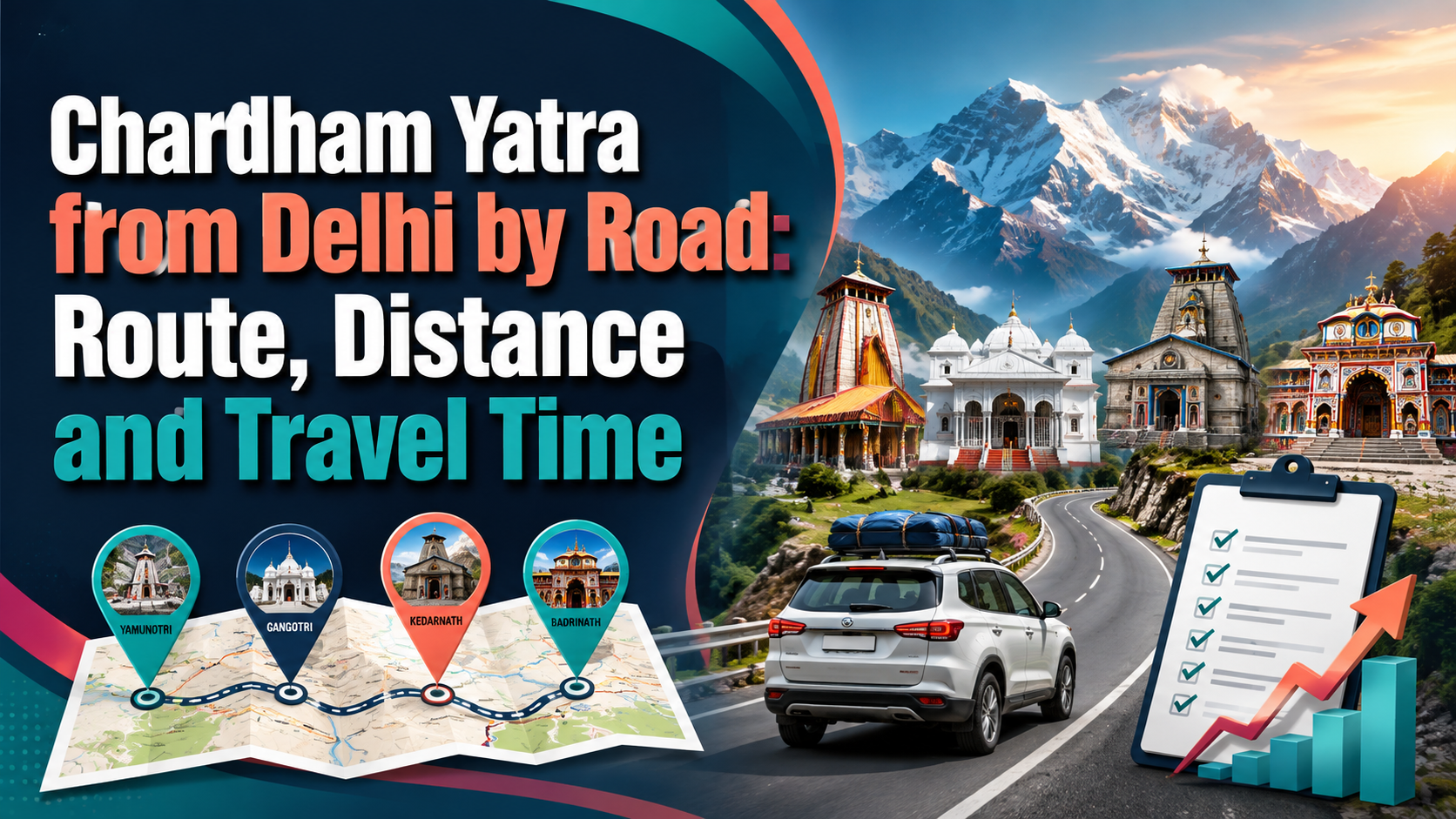
Chardham Yatra Route from Delhi by Road: Distance and Travel Time
Planning a pilgrimage to Uttarakhand’s sacred Char Dham shrines is a memorable journey, especially when travelling by road from the national capital. The Chardham Yatra route from Delhi takes travellers through scenic Himalayan landscapes, historic pilgrimage towns and some of the most revered temples in India. The traditional Char Dham circuit covers Yamunotri, Gangotri, Kedarnath and Badrinath, with each destination offering a unique spiritual and geographical experience.
For travellers choosing the Chardham Yatra by Road from Delhi, understanding the route, approximate distance, driving time and major stops can make the journey considerably easier. Since mountain roads, weather and traffic can affect travel schedules, it is best to plan the trip with sufficient flexibility.
What Is the Chardham Yatra Route from Delhi?
The road journey from Delhi generally enters Uttarakhand through western and central parts of the state before reaching the Himalayan pilgrimage destinations. A commonly followed circuit covers Yamunotri first, followed by Gangotri, Kedarnath and Badrinath, although the sequence can vary depending on the itinerary, road conditions and travel arrangements.
A typical Chardham Yatra route from Delhi may pass through destinations such as Haridwar, Rishikesh, Barkot, Janki Chatti, Uttarkashi, Guptkashi or Sitapur, Sonprayag and Joshimath before reaching the four Dhams.
The journey is not simply a long drive. Several sections require trekking or regulated local transportation because vehicles cannot reach the main temple locations. Yamunotri and Kedarnath, in particular, involve a significant walking component or alternative local travel arrangements.
Chardham Yatra Distance from Delhi
The overall road distance for a complete Char Dham pilgrimage from Delhi and back can vary considerably depending on the exact route, hotel locations, diversions and sightseeing stops. Travellers should generally expect the complete journey to cover well over 1,500 kilometres.
Approximate road distances for major sections are:
Delhi to Haridwar and Rishikesh
Delhi to Haridwar is approximately 220 km by road, while Delhi to Rishikesh is around 240–250 km. Depending on traffic, these sections can take roughly 5 to 7 hours.
Haridwar or Rishikesh is often used as an important starting point for the Himalayan portion of the pilgrimage. Travellers may stay overnight here before continuing towards the mountains.
Rishikesh to Barkot
The journey from Rishikesh towards Barkot is approximately 180–200 km, with travel times commonly ranging from 7 to 9 hours. The route gradually moves into the mountainous region, and driving speeds become slower as the roads become more winding.
Barkot is an important base for travellers heading towards Yamunotri.
Barkot to Yamunotri
Vehicles generally travel from Barkot towards Janki Chatti or the designated roadhead. From there, pilgrims continue towards Yamunotri through the mountain trail.
The walking distance is approximately 5–6 km one way, although the exact accessible point and local arrangements can vary. This makes the Yamunotri leg physically more demanding than a conventional road journey.
Yamunotri to Gangotri
After completing Yamunotri, the route generally proceeds towards Uttarkashi and then Gangotri. The journey involves mountain roads and can take a full day depending on the starting point and road conditions.
Gangotri is situated at a high altitude and offers spectacular views of the surrounding Himalayan landscape. Travellers should avoid rushing this section because mountain driving requires additional time.
Gangotri to Kedarnath Region
The route from Gangotri towards the Kedarnath region is another lengthy mountain journey. Travellers generally move through Uttarkashi and onward towards Guptkashi, Sitapur or Sonprayag.
Since vehicles do not travel directly to Kedarnath temple, pilgrims must continue from Sonprayag according to the prevailing local travel arrangements. The trek to Kedarnath is considerably longer than the Yamunotri walk, making this one of the most physically demanding parts of the pilgrimage.
Kedarnath to Badrinath
After returning from Kedarnath, the journey continues towards Badrinath through the Garhwal Himalayas. Depending on the itinerary, travellers may pass through destinations such as Guptkashi, Chopta, Chamoli, Pipalkoti and Joshimath.
The road distance and travel time can vary because of route conditions and operational changes. It is sensible to keep an entire day available for this transfer rather than planning a tightly timed schedule.
How Long Does Chardham Yatra by Road from Delhi Take?
A comfortable Chardham Yatra by Road from Delhi generally requires around 10 to 14 days, depending on the itinerary and number of overnight stays. A shorter schedule may be possible, but it can involve long driving hours and less time for rest.
A well-planned pilgrimage should allow adequate time for:
- Road travel between Himalayan destinations
- Temple visits and darshan
- Trekking to Yamunotri and Kedarnath
- Weather or traffic-related delays
- Rest and acclimatization
- Local transportation arrangements
For most families, senior travellers and first-time visitors, a balanced itinerary is preferable to trying to complete the entire circuit as quickly as possible.
Best Route Planning Tips for Chardham Yatra
The Chardham Yatra route from Delhi involves changing road conditions, steep gradients and unpredictable mountain weather. Planning each day’s destination in advance can make the experience more comfortable.
Start early whenever possible, particularly on longer mountain stretches. Daylight is valuable in the hills, and arriving at your accommodation before evening generally provides a safer and more relaxed experience.
Keep some flexibility in the itinerary. Landslides, rainfall, traffic restrictions, road maintenance or local conditions can occasionally increase travel time. Avoid scheduling important connections immediately after a long mountain drive.
Accommodation should also be selected according to the route rather than simply the lowest price. Staying at a convenient location can reduce unnecessary driving and provide more time for rest.
If you prefer a structured itinerary with planned transfers and stays, you can explore this Chardham Yatra from Delhi by road option for a more organized pilgrimage experience.
When Is the Best Time for Chardham Yatra?
The Char Dham temples are located in high Himalayan areas where winter conditions can make access difficult. The pilgrimage season generally begins after the temples reopen following winter closure and continues through the warmer months, with the exact opening and closing dates varying each year.
May and June are popular months because of relatively favourable conditions, although these months can also be busy. The post-monsoon period can offer pleasant travel conditions, but weather and road conditions should always be checked before departure.
Monsoon travel requires additional caution because heavy rainfall can affect mountain roads. Travellers should consider current weather and road advisories when finalizing their plans.
What Should You Keep in Mind for the Road Journey?
The Chardham Yatra is both a spiritual pilgrimage and a challenging Himalayan journey. Carry comfortable walking shoes, warm clothing, rain protection, essential medicines and personal identification documents.
Because temperatures can change significantly between Delhi and the higher Himalayan regions, layered clothing is particularly useful. Keep drinking water regularly and take sufficient rest, especially after reaching higher altitudes.
It is also important to remember that the actual journey time may differ from estimates shown on maps. Mountain roads are not comparable to highways, and short distances can sometimes require several hours of travel.
FAQs About Chardham Yatra from Delhi
What is the approximate Chardham Yatra distance from Delhi?
The complete road journey from Delhi covering all four Dhams and returning to Delhi can exceed 1,500 km. The exact distance depends on the chosen route, accommodation points, local transfers, sightseeing and road conditions.
How many days are needed for Chardham Yatra by road from Delhi?
A comfortable trip generally takes around 10 to 14 days. The ideal duration depends on the itinerary, trekking requirements, rest days and the amount of time allocated to each Dham.
Can I complete Chardham Yatra entirely by car?
No. Vehicles cannot reach the main temple locations at Yamunotri and Kedarnath. Pilgrims need to use the permitted local arrangements and trekking routes for these sections.
Which Dham comes first from Delhi?
There is no single mandatory order for every road itinerary. Many organized journeys cover Yamunotri first, followed by Gangotri, Kedarnath and Badrinath, but the sequence can change according to the planned route and conditions.
Is the Chardham Yatra route from Delhi suitable for families?
Yes, families can undertake the pilgrimage by road with proper planning. However, the journey includes long drives, mountain roads and trekking, so senior citizens and children should have an itinerary that allows adequate rest and avoids unnecessarily long travel days.
The Chardham Yatra route from Delhi combines a long road journey with some of Uttarakhand’s most sacred pilgrimage destinations. From the plains around Delhi, Haridwar and Rishikesh, the route gradually enters the mountains before reaching Yamunotri, Gangotri, Kedarnath and Badrinath.
Understanding the Chardham Yatra by Road from Delhi distance, travel time, trekking requirements and likely overnight stops helps travellers prepare realistically. Rather than focusing only on completing the route quickly, allow enough time for darshan, rest, changing weather and the unique challenges of Himalayan travel. With a well-organized itinerary and suitable preparation, the journey can become a comfortable, meaningful and memorable pilgrimage.
