

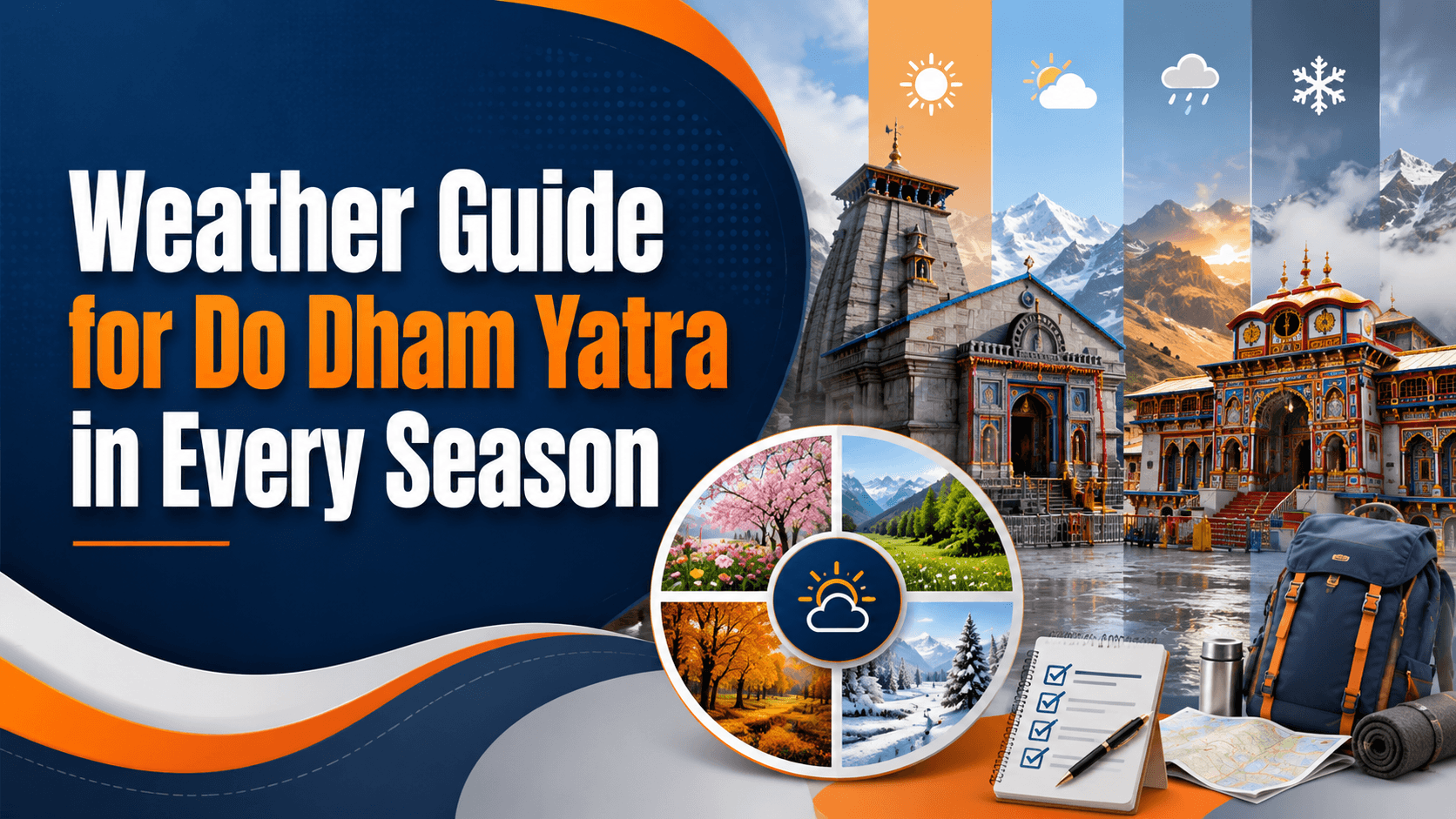
Do Dham Yatra Weather: A Complete Seasonal Guide
Understanding Do Dham Yatra weather is essential when planning a pilgrimage to Kedarnath and Badrinath. Located in the high-altitude Himalayan region of Uttarakhand, both sacred destinations experience significant changes in temperature, rainfall, snowfall, and road conditions throughout the year. Weather can directly affect your travel comfort, clothing requirements, sightseeing plans, and overall Yatra experience.
Kedarnath is situated at a higher altitude and generally experiences colder conditions than Badrinath. While the pilgrimage season is concentrated around the warmer months, each season offers a different experience. Knowing what to expect can help you select the right travel period and prepare accordingly.
Do Dham Yatra Weather in Spring: April to May
Spring marks the beginning of the annual pilgrimage season. As winter gradually recedes, roads and trekking routes become more accessible, although snowfall can still be present around higher elevations.
Weather Conditions
April and early May can remain quite cold, particularly in Kedarnath. Daytime conditions may be manageable, while mornings and nights can be freezing. Badrinath also remains chilly, with temperatures varying considerably between daytime and nighttime.
Snow may still be visible around the temples and surrounding mountain peaks. Weather can change quickly, so travelers should be prepared for cold winds and occasional precipitation.
What to Carry
- Warm jackets and thermal layers
- Woollen caps, gloves, and socks
- Comfortable waterproof footwear
- Rain protection
- Moisturizer and lip balm
- Sunglasses and sunscreen
Spring is a good option for travelers who want to experience the Himalayan landscape before the peak summer rush, provided they are comfortable with colder conditions.
Do Dham Yatra Weather in Summer: May to June
Summer is generally one of the most popular periods for the Do Dham Yatra. Temperatures in the plains can become warm, but the higher Himalayan destinations remain comparatively cool.
Weather Conditions
During May and June, daytime weather around Kedarnath and Badrinath is usually pleasant to cold. However, temperatures can drop significantly after sunset. Clear mountain views are often possible, although sudden showers can occur.
The period around June may also become busier because of the growing number of pilgrims. Travelers should account for increased traffic, accommodation demand, and possible delays on mountain roads.
For a smoother pilgrimage experience, consider planning your itinerary with sufficient buffer time. If you are looking for a structured pilgrimage option, explore the Do Dham Yatra from Haridwar to understand how the journey can be organized.
Do Dham Yatra Weather During Monsoon: July to September
The monsoon season brings a major change in Do Dham Yatra Weather. Although the mountains become lush and scenic, heavy rainfall can make travel more challenging.
Rainfall and Road Conditions
July and August typically receive substantial rainfall across Uttarakhand. Landslides, falling rocks, waterlogging, and temporary road closures can affect travel in mountainous areas. Even when the weather appears clear at the starting point, conditions can be different farther along the route.
September can offer some improvement as rainfall gradually decreases. However, weather remains unpredictable, and travelers should continue monitoring local conditions before beginning their journey.
If traveling during the monsoon is unavoidable, keep your itinerary flexible and allow extra time for unexpected road delays.
Do Dham Yatra Weather in Autumn: September to November
Autumn is often considered one of the most favorable periods for Himalayan travel. After the monsoon, the skies may become clearer, visibility can improve, and the mountain scenery can be spectacular.
Weather Conditions
September and October generally offer comfortable daytime conditions, while mornings and evenings remain cold. By November, temperatures drop considerably, especially at Kedarnath and other high-altitude locations.
Snowfall may begin returning to higher areas toward the later part of the season. Travelers visiting toward the end of the pilgrimage season should check temple opening and closing schedules as well as road accessibility.
The combination of clearer skies and dramatic mountain views makes early autumn particularly attractive for photography and sightseeing.
Do Dham Yatra Weather in Winter: December to March
Winter brings severe cold and heavy snowfall to the higher Himalayan regions. Kedarnath and Badrinath experience freezing temperatures, and significant snowfall can make access difficult.
During this period, the main temples follow their established winter arrangements, with worship continuing at designated winter seats. Regular tourist access to the high-altitude pilgrimage locations is not comparable to the main Yatra season.
For travelers planning a pilgrimage, winter is therefore generally not the preferred season for the traditional Do Dham route.
Best Time for Do Dham Yatra
The best time depends on your priorities, but May to June and September to October are generally among the most practical periods for planning a Do Dham pilgrimage.
May and June provide relatively favorable temperatures and active pilgrimage-season facilities. September and October can offer pleasant conditions, clearer mountain views, and a beautiful post-monsoon landscape.
Monsoon travel requires greater caution because rainfall can affect roads and journey schedules. Winter, meanwhile, brings severe cold and restricted accessibility at high altitudes.
How Weather Can Affect Your Do Dham Yatra
Mountain weather can change rapidly, so travelers should avoid planning an overly tight itinerary. A journey that normally takes a certain number of hours can take significantly longer if rainfall, traffic, road repairs, or other disruptions occur.
It is also important to dress in layers. Temperatures can feel comfortable during the day but become very cold in the early morning and evening. Waterproof bags and rain protection are useful even outside the main monsoon period.
Before departure, check the latest weather forecast and local travel advisories. Carry essential medicines, stay hydrated, and avoid rushing at high altitudes.
FAQs About Do Dham Yatra Weather
What is the best month for Do Dham Yatra?
May, June, September, and October are generally favorable months. The ideal month depends on road conditions, pilgrimage schedules, weather forecasts, and personal preferences.
Is Do Dham Yatra possible during the monsoon?
It can be possible, but July and August require additional caution because heavy rainfall can cause landslides and road disruptions. Flexible travel plans are strongly recommended.
Is Kedarnath colder than Badrinath?
Generally, yes. Kedarnath is located at a higher elevation and can experience colder conditions, particularly at night and during the beginning and end of the pilgrimage season.
What clothes should I carry for Do Dham Yatra?
Carry thermal wear, warm jackets, woollen accessories, comfortable walking shoes, rain protection, and extra layers. Waterproof footwear can be particularly useful during wet conditions.
Can weather cause delays during the Yatra?
Yes. Rainfall, snowfall, landslides, traffic, and road conditions can all affect journey times. Keeping some buffer days in your itinerary can make the trip more comfortable.
Checking Do Dham Yatra weather before your journey can make a significant difference to safety, comfort, and overall travel experience. Each season has its own advantages, from pleasant summer conditions and clear autumn views to the challenging rains of monsoon and severe Himalayan winter.
For most pilgrims, late spring, early summer, and the post-monsoon autumn period provide practical opportunities to visit Kedarnath and Badrinath. Regardless of when you travel, always check current weather and road conditions, carry suitable clothing, and keep your itinerary flexible. With thoughtful planning and proper preparation, your Do Dham Yatra can be a memorable and spiritually fulfilling Himalayan journey.
