

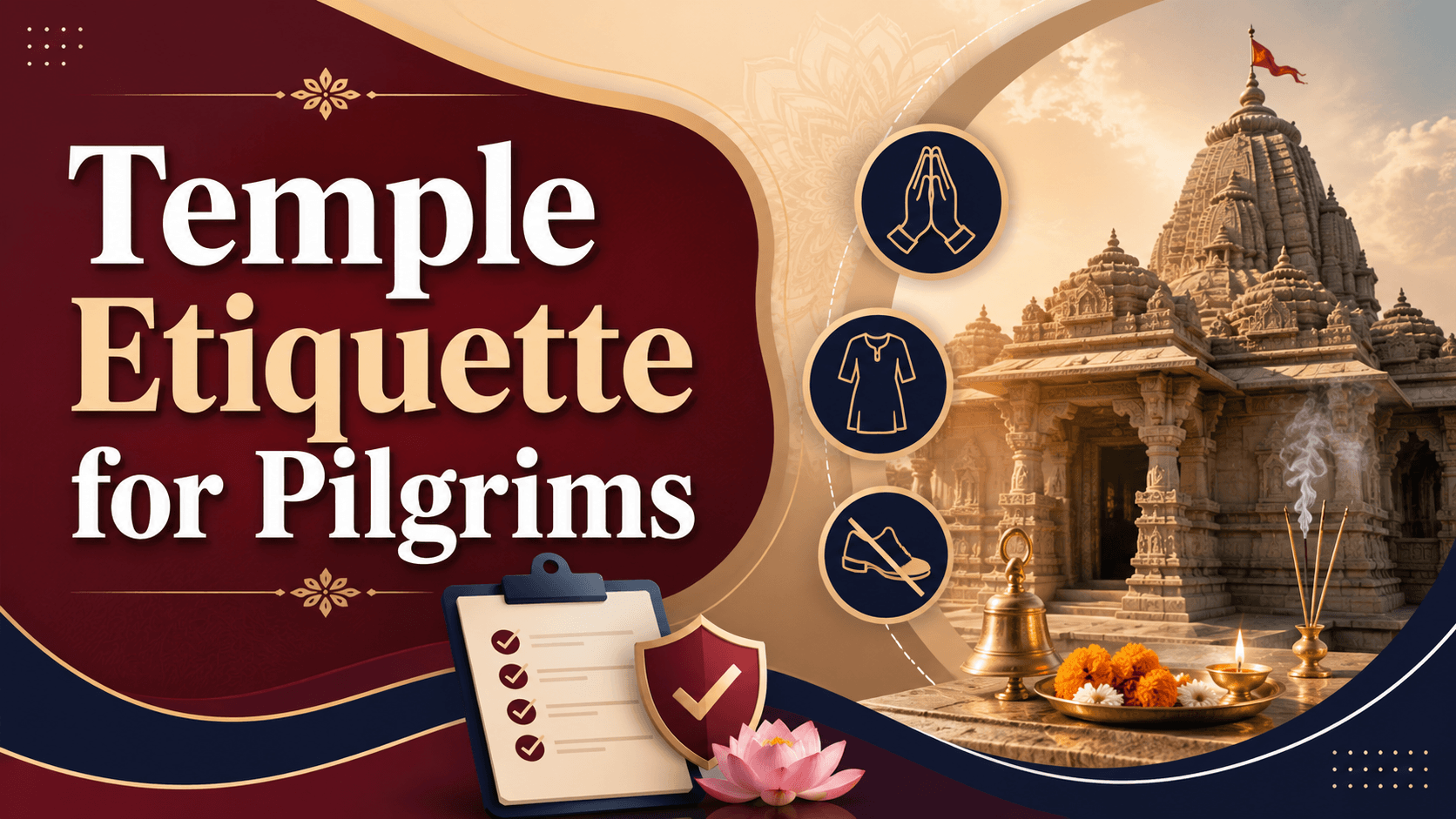
Temple Etiquette for Pilgrims: Essential Guidelines for a Respectful Visit
Visiting a temple is much more than a sightseeing experience. It is a spiritual journey where devotion, discipline, and respect come together. Understanding temple etiquette for pilgrims helps visitors honor religious traditions while ensuring a peaceful atmosphere for everyone. Whether you are visiting a famous pilgrimage destination or a local shrine, following proper customs allows you to experience the true essence of India’s sacred heritage.
Every temple may have its own unique traditions, but many customs are common across most Hindu temples. Knowing these practices before your visit helps you avoid unintentional mistakes and makes your pilgrimage more meaningful.
Why Temple Etiquette Matters
Temples are considered sacred spaces where devotees come to pray, meditate, and seek blessings. Proper conduct demonstrates respect for the deity, priests, local traditions, and fellow worshippers. Following temple etiquette for pilgrims also preserves the spiritual environment and centuries-old cultural practices that have been passed down through generations.
Respectful behavior creates a positive experience not only for yourself but also for everyone sharing the sacred space.
Dress Modestly and Respectfully
One of the most important aspects of visiting a temple is wearing appropriate clothing. Most temples encourage visitors to dress modestly as a sign of respect.
Choose clean, comfortable clothes that cover your shoulders and knees. Traditional Indian attire is often preferred, but decent western clothing is generally acceptable unless a temple has specific dress regulations. Avoid revealing outfits, excessively tight clothing, or garments with offensive designs.
Some temples provide shawls or wraps if additional covering is required.
Remove Footwear Before Entering
Removing shoes before entering the temple premises is a long-standing tradition symbolizing purity and humility. Many temples have designated footwear counters where pilgrims can safely leave their shoes.
In some temples, leather belts, wallets, or bags may also be discouraged inside the sanctum. Always check local guidelines before entering.
Maintain Silence and Respectful Behavior
Temples are places of worship where many devotees come to pray quietly. Speaking softly helps maintain a peaceful atmosphere.
While following temple etiquette for pilgrims, remember to:
- Keep mobile phones on silent mode.
- Avoid loud conversations.
- Do not play music or videos.
- Respect queues for darshan.
- Follow instructions from temple staff and volunteers.
Simple acts of patience and courtesy contribute significantly to the spiritual experience.
Follow Photography Rules
Many temples prohibit photography inside the main shrine or throughout the premises. These restrictions help preserve the sanctity of religious rituals and protect sacred idols.
If photography is allowed in certain areas, avoid using flash and never disturb devotees who are praying. When in doubt, ask temple authorities before taking pictures.
Respect Rituals and Traditions
Each temple follows its own customs regarding worship, offerings, and rituals. Observe what local devotees are doing and follow their example whenever appropriate.
Do not cross restricted areas reserved for priests or temple staff. If you are unfamiliar with a particular ritual, politely ask for guidance rather than making assumptions.
Understanding these traditions is an essential part of temple etiquette for pilgrims and enriches your overall pilgrimage experience.
Offer Prayers with Devotion
Offerings such as flowers, fruits, sweets, or coconuts are common in many temples. Purchase offerings from authorized vendors or use those provided by the temple.
Always hand offerings respectfully to the priest if required, and avoid placing them directly where prohibited. Accept prasad with both hands as a gesture of gratitude and reverence.
Keep the Temple Clean
Cleanliness is considered an important part of spirituality. Help maintain the temple environment by disposing of waste only in designated bins.
Avoid littering flower wrappers, plastic bottles, food containers, or other waste within the temple premises. Respect public facilities and help preserve these sacred places for future generations.
Be Considerate of Other Pilgrims
Popular pilgrimage destinations often attract thousands of visitors every day. During peak seasons, patience becomes especially important.
Allow elderly devotees, children, and differently abled visitors sufficient space and assistance when needed. Avoid pushing or rushing during darshan queues.
Showing kindness and cooperation reflects the true spirit of pilgrimage.
Understand Local Temple Customs
India’s temples represent diverse traditions and regional practices. Some temples may have specific entry rules based on religious customs, festival timings, or ceremonial events.
Before visiting major pilgrimage destinations, it is helpful to learn about local guidelines in advance. If you are planning a spiritual journey to the Himalayas, consider exploring the well-organized Chardham Yatra from Delhi package to make your pilgrimage comfortable and well planned.
Respect Temple Timings
Most temples operate according to fixed schedules for morning and evening prayers. Arriving during designated darshan hours allows you to participate in the temple experience without disrupting ongoing rituals.
Special festivals may have different timings, larger crowds, and unique ceremonies. Planning ahead helps ensure a smoother visit.
Safety Tips During Pilgrimage
Pilgrimage often involves long travel, walking, and waiting in queues. A few simple precautions can make your journey more comfortable.
Stay Hydrated
Carry drinking water whenever permitted and remain hydrated, especially during summer months.
Carry Essential Medicines
If you have medical conditions, keep necessary medicines readily available during your journey.
Protect Your Belongings
Carry only essential valuables and remain aware of your personal belongings, particularly in crowded temple complexes.
Follow Official Instructions
Temple authorities and local volunteers are there to ensure safety and smooth crowd management. Cooperate with their directions throughout your visit.
Common Mistakes to Avoid
Many first-time visitors unintentionally overlook important customs. Avoid these common mistakes:
Wearing Inappropriate Clothing
Dress modestly and respectfully according to temple traditions.
Ignoring Queue Discipline
Always wait patiently for your turn during darshan.
Using Mobile Phones Excessively
Limit phone usage and avoid taking calls inside sacred areas.
Touching Sacred Objects Without Permission
Many idols, ritual items, and ceremonial objects should only be handled by authorized priests.
Disrespecting Local Traditions
Every temple has unique customs. Observing and respecting them demonstrates genuine devotion.
FAQs
What is the proper dress code for visiting a temple?
Wear clean, modest clothing that covers your shoulders and knees. Traditional attire is welcome, but decent western clothing is usually acceptable unless specific dress rules apply.
Can I take photographs inside temples?
Photography policies differ between temples. Many prohibit photography inside the sanctum, while some allow it in designated areas. Always follow posted instructions.
Why do pilgrims remove their shoes before entering?
Removing footwear symbolizes cleanliness, humility, and respect before entering a sacred place of worship.
Are mobile phones allowed inside temples?
Mobile phones are generally allowed in many temple complexes, but they should remain on silent mode. Some temples may restrict phone usage entirely in certain areas.
How can first-time visitors prepare for a temple visit?
Learn basic temple customs, dress appropriately, arrive during visiting hours, respect local traditions, maintain silence, and follow all instructions from temple authorities.
Following temple etiquette for pilgrims allows every visitor to experience the spiritual atmosphere of a temple with respect and sincerity. Simple practices such as dressing modestly, maintaining silence, respecting rituals, and showing consideration for fellow devotees create a more meaningful pilgrimage. Whether visiting a nearby shrine or embarking on a major spiritual journey, observing temple etiquette for pilgrims helps preserve sacred traditions while making your visit peaceful, memorable, and spiritually fulfilling.
