

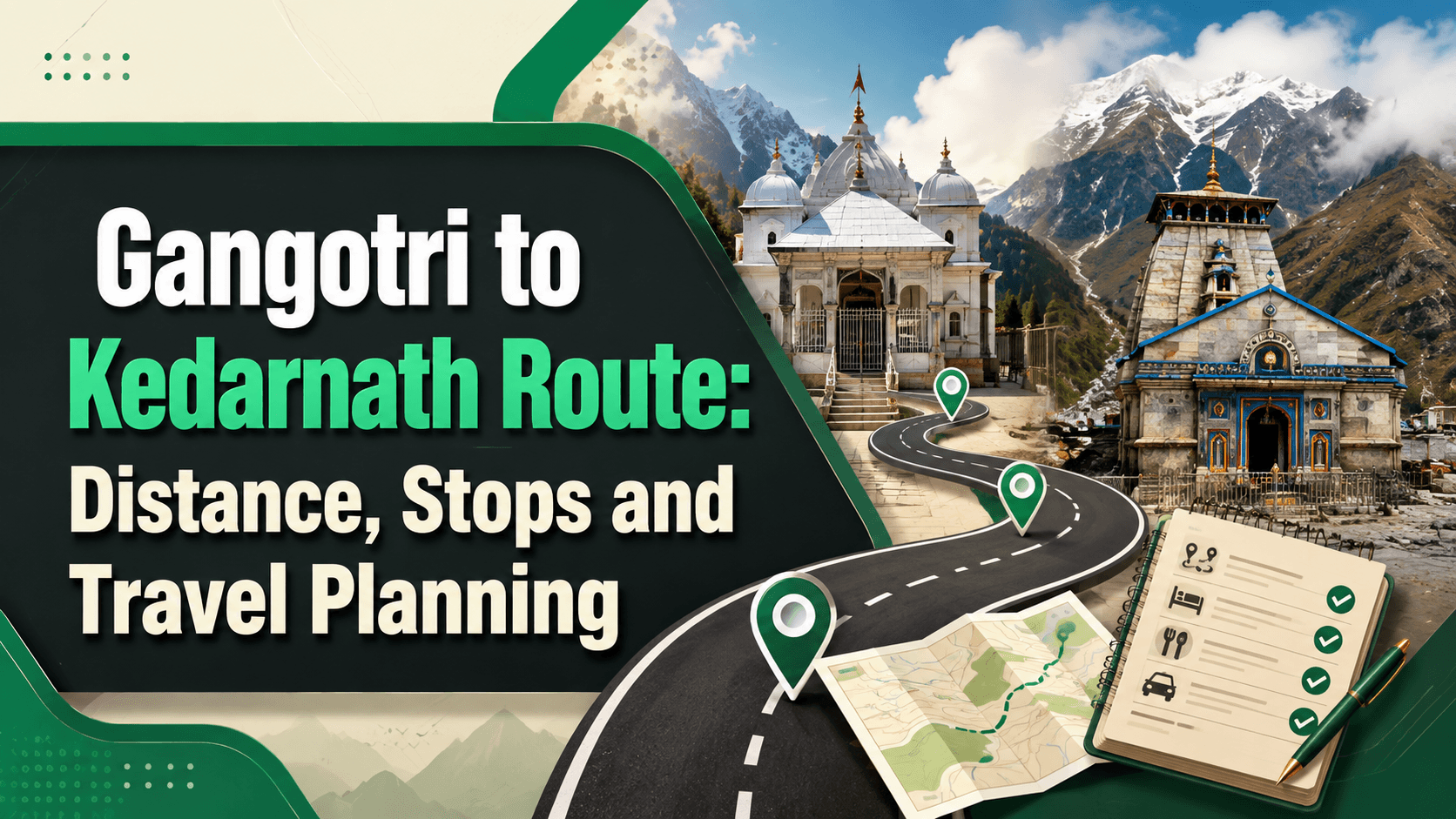
Gangotri to Kedarnath route is an important stretch of the Char Dham Yatra for pilgrims visiting two of Uttarakhand’s most sacred Himalayan destinations. The journey connects Gangotri, the revered source of the Ganga, with Kedarnath, one of the most important Shiva temples in India. Although the two destinations are relatively close on a map, the mountainous terrain, winding roads, weather conditions and travel stops make proper planning essential. Understanding the route, approximate distance, major halts and travel time can make your Gangotri to Kedarnath travel much more comfortable.
Gangotri to Kedarnath Route at a Glance
The road journey from Gangotri to Kedarnath generally covers around 400 to 450 kilometres, depending on the route and the point from which the journey is measured. Because this is a Himalayan road journey, travel time can vary considerably. Under normal road conditions, travellers should allow approximately 12 to 15 hours of driving time, while a longer journey with sightseeing, meal breaks or overnight stops can take more time.
A commonly travelled route goes through Harsil, Uttarkashi, Dharasu, Chamba, Tehri, Srinagar, Rudraprayag, Kund, Guptkashi and Sonprayag before reaching the Kedarnath trekking point. From Sonprayag, pilgrims generally continue towards Gaurikund and begin the trek to Kedarnath.
The exact route may change according to road conditions, weather, traffic restrictions and local administration. For this reason, travellers should avoid planning the journey around a very tight schedule.
Major Stops on the Gangotri to Kedarnath Route
Gangotri
Gangotri is the starting point for this section of the pilgrimage. Before departing, pilgrims can visit the Gangotri Temple and spend some time exploring the surrounding Himalayan landscape. Since Gangotri is situated at a high altitude, taking adequate rest before beginning a long road journey is advisable.
Harsil and Dharali
Harsil is one of the most scenic places in the Gangotri region. Surrounded by mountains, forests and the Bhagirathi River, it is a popular halt for travellers. Dharali, located nearby, is also known for its peaceful surroundings and traditional Himalayan villages.
These places are useful for a short break, refreshments or an overnight stay if you prefer a slower pace of Gangotri to Kedarnath travel.
Uttarkashi
Uttarkashi is an important town on the route and a practical place for fuel, food, accommodation and other necessities. Travellers who are not comfortable with long continuous mountain drives can consider Uttarkashi as an intermediate stop while planning their journey.
Tehri
The route continues towards the Tehri region, where travellers can enjoy views of the mountains and the Tehri Lake area. Depending on the itinerary, this section can be combined with other destinations in the Garhwal region.
Srinagar
Srinagar Garhwal is an important commercial and transport centre. It offers more accommodation and food options than many smaller mountain settlements, making it a convenient stopping point during a multi-day pilgrimage.
Rudraprayag
Rudraprayag is one of the most significant stops on the Gangotri to Kedarnath route. The town is located at the confluence of the Alaknanda and Mandakini rivers and serves as a major junction for travellers heading towards Kedarnath.
Guptkashi and Sonprayag
After Rudraprayag, travellers generally continue towards Kund and Guptkashi before reaching Sonprayag. Guptkashi is another useful location for accommodation, meals and rest.
Sonprayag is particularly important because it is the main access point for pilgrims travelling towards Gaurikund and Kedarnath. Vehicle movement and local travel arrangements can be regulated here, especially during the busy pilgrimage season.
Gangotri to Kedarnath Distance and Travel Time
The approximate road distance between Gangotri and the Kedarnath region is around 400 to 450 kilometres. However, the practical travel time is more important than the distance because mountain roads require slower speeds and frequent breaks.
A journey that appears manageable on a standard map can become tiring because of hairpin bends, steep gradients, narrow sections and changing weather. Rainfall can also affect road conditions and traffic movement.
If you are travelling directly, starting early in the morning is generally preferable. However, splitting the journey into two days can be a better choice for families, senior citizens and travellers who want a more relaxed pilgrimage experience.
How to Plan Gangotri to Kedarnath Travel
Choose the Right Number of Days
Avoid treating this as a simple point-to-point road trip. A comfortable itinerary should include sufficient time for rest, meals and unexpected delays. If your overall Char Dham itinerary includes Gangotri, Kedarnath, Badrinath and Yamunotri, allocating adequate days to each destination can make the journey considerably easier.
For travellers looking for an organized pilgrimage itinerary, a Kedarnath Badrinath Gangotri Yamunotri tour from Delhi can provide a structured way to cover the major Char Dham destinations without having to coordinate every road journey independently.
Check Weather and Road Conditions
Mountain weather can change quickly. Before leaving Gangotri, check the latest local road and weather conditions, particularly during the monsoon and early pilgrimage season. Landslides, heavy rainfall and road maintenance can cause delays.
Keep your itinerary flexible enough to accommodate unexpected changes.
Plan Accommodation in Advance
Accommodation can become difficult to find during peak pilgrimage periods. Popular stopping points such as Uttarkashi, Srinagar, Rudraprayag and Guptkashi can become busy, particularly when pilgrimage traffic increases.
Booking accommodation ahead of time is especially useful for families and larger groups.
Prepare for the Kedarnath Trek
The road does not take you directly to Kedarnath Temple. After reaching the appropriate road-access point, pilgrims need to continue towards the Kedarnath trekking area. The trek is physically demanding, so avoid arriving exhausted after an excessively long road journey.
Keep comfortable walking shoes, warm clothing, water and essential medicines readily available.
Best Time for the Journey
The best time for Gangotri to Kedarnath travel is generally during the main pilgrimage season when the temples are accessible and weather conditions are comparatively suitable. The exact opening and closing dates of the temples vary each year.
Summer and early autumn are generally preferred by pilgrims, while the monsoon period requires additional caution because heavy rainfall can affect Himalayan roads. Always check current local conditions before starting the journey.
Important Travel Tips
Start mountain journeys early whenever practical and avoid unnecessary late-night driving. Carry sufficient drinking water and basic snacks because food options can become limited between major towns.
Keep some cash available for smaller local expenses, as connectivity and digital payment availability can vary in remote areas. Carry warm layers even when travelling during warmer months because temperatures can change significantly with altitude.
If travelling with children or senior family members, plan shorter driving days and include adequate rest stops. Most importantly, do not rush to cover the Gangotri to Kedarnath route. The journey itself is part of the Himalayan pilgrimage experience.
Frequently Asked Questions
How far is Gangotri from Kedarnath by road?
The approximate road distance is around 400 to 450 kilometres, depending on the route and exact starting and ending points. Because of mountainous terrain, the journey can take considerably longer than a similar distance on plains.
How long does it take to travel from Gangotri to Kedarnath?
A direct road journey can take roughly 12 to 15 hours under favourable conditions, but travellers should allow additional time for breaks, traffic, weather and road delays. Splitting the journey across two days can be more comfortable.
Which are the main stops between Gangotri and Kedarnath?
Important stops can include Harsil, Uttarkashi, Tehri, Srinagar, Rudraprayag, Guptkashi and Sonprayag. The exact route and stopping points may vary according to road conditions and the itinerary.
Can we go directly from Gangotri to Kedarnath?
Yes, it is possible to travel by road towards the Kedarnath access area, but the journey is long. Since Kedarnath Temple is not directly accessible by road, pilgrims must continue from the roadhead towards Gaurikund and then undertake the onward journey to the temple.
Is Gangotri to Kedarnath travel suitable for families?
Yes, families can make the journey with proper planning. It is better to avoid an overly packed schedule, take regular breaks and arrange suitable accommodation. Senior citizens and young children may particularly benefit from dividing the road journey into manageable sections.
The Gangotri to Kedarnath route combines some of the most spectacular landscapes and important pilgrimage destinations in Uttarakhand. While the journey covers a substantial mountain distance, careful planning around stops, accommodation, weather and the Kedarnath trek can make the experience smoother and more enjoyable. With a flexible itinerary and adequate rest, Gangotri to Kedarnath travel can become one of the most memorable parts of a Char Dham pilgrimage.
