

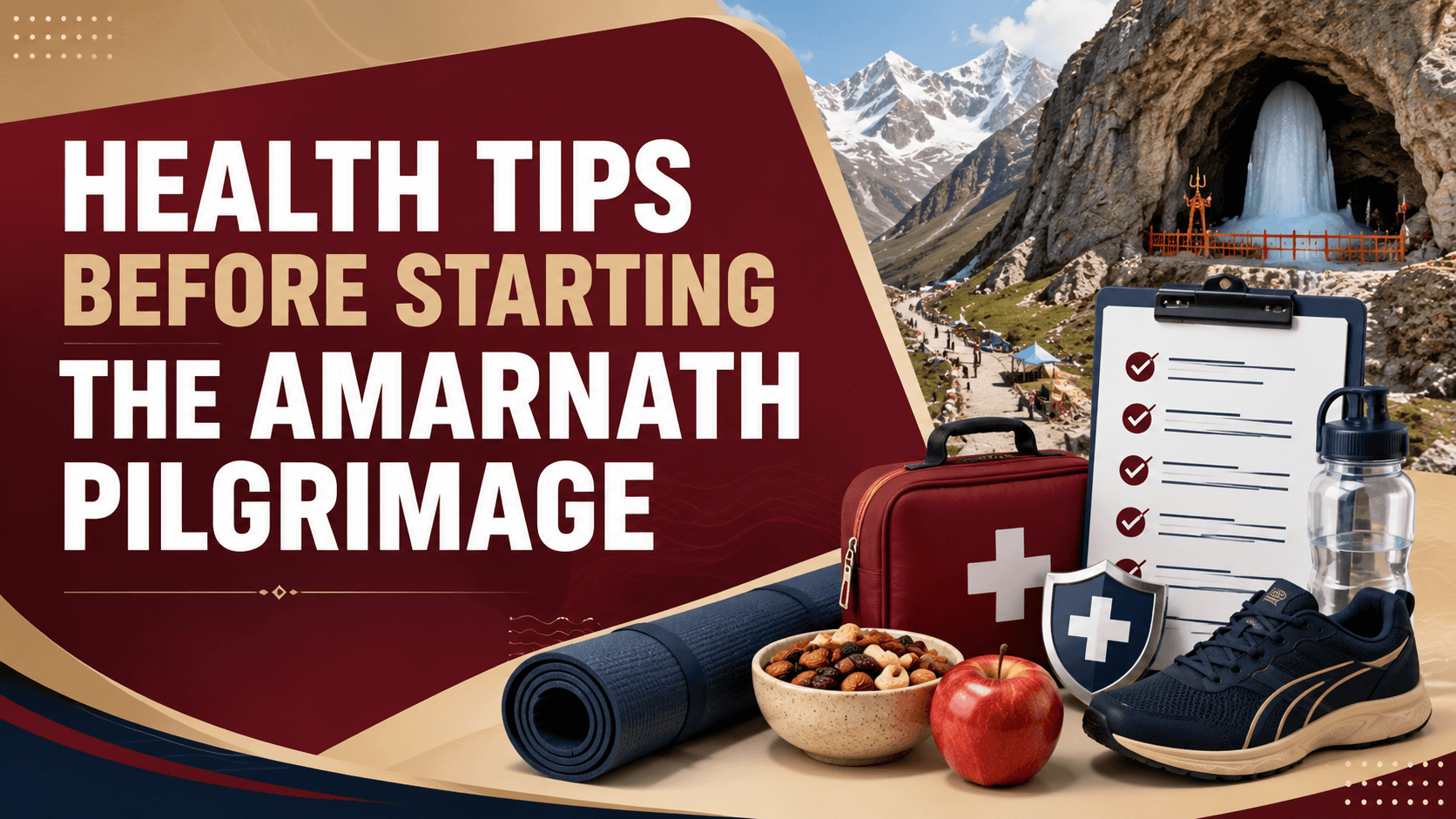
Health Tips Before Starting the Amarnath Pilgrimage
The Amarnath Yatra is a spiritually meaningful journey that also requires proper physical preparation. The high-altitude environment, long walking routes, changing weather, and steep terrain can be challenging even for experienced travellers. Following practical Amarnath pilgrimage health tips before you begin can help you stay comfortable, manage fatigue, and focus on the spiritual experience. Whether you are travelling with family, friends, or as part of an organised Amarnath Pilgrimage Tour, preparing your body and mind in advance is essential.
Why Health Preparation Matters for the Amarnath Yatra
The Amarnath pilgrimage involves travelling through mountainous terrain where oxygen levels are lower than at normal elevations. Depending on the route and travel arrangements, pilgrims may need to walk for several hours and deal with cold temperatures, rain, wind, uneven paths, and sudden weather changes.
People who are not accustomed to high-altitude travel may experience tiredness, headache, dizziness, breathlessness, or nausea. Good preparation does not eliminate every risk, but it can make the journey considerably easier.
A few weeks before your trip, start improving your walking stamina. Regular walking, gentle jogging, cycling, or other suitable cardiovascular activities can help build endurance. Gradually increasing the duration of your exercise is generally better than attempting intense workouts immediately before travelling.
Start Building Your Fitness Before the Journey
Walk Regularly
Walking is one of the simplest ways to prepare for a pilgrimage that involves extended periods on foot. Begin with comfortable daily walks and gradually increase your distance. Include some stairs or gentle inclines if your fitness level allows.
Your goal should be to improve endurance rather than achieve maximum speed. During the actual pilgrimage, maintaining a steady and comfortable pace can help conserve energy.
Strengthen Your Legs
Your legs carry most of the workload during a mountain journey. Simple exercises such as squats, step-ups, calf raises, and lunges can help improve lower-body strength when performed safely and appropriately.
Avoid starting a demanding exercise routine just days before departure. Give your body enough time to adapt and recover.
Pay Attention to Altitude
Altitude is one of the most important considerations when preparing for an Amarnath Pilgrimage Tour. The body needs time to adjust to reduced oxygen availability at higher elevations.
One of the most important Amarnath pilgrimage health tips is to avoid rushing immediately after reaching a high-altitude location. Allow yourself time to rest and acclimatise according to your travel schedule.
Do not ignore symptoms such as persistent headache, unusual dizziness, severe weakness, difficulty breathing, confusion, or vomiting. If symptoms become significant or worsen, inform your travel companions or medical personnel and seek appropriate medical attention promptly.
Stay Hydrated Throughout the Yatra
Cold weather can sometimes reduce the sensation of thirst, but your body still needs adequate fluids. Walking for long periods, particularly on uphill routes, can increase fluid requirements.
Carry drinking water and take regular small sips rather than waiting until you feel extremely thirsty. Hydration can also support normal energy levels during the journey.
Avoid excessive consumption of caffeinated or very sugary drinks if they do not suit you. Follow your doctor’s advice if you have a medical condition that requires you to restrict or regulate fluid intake.
Eat Light, Nutritious Meals
Food plays an important role in maintaining energy during a pilgrimage. Choose meals that are familiar to you and provide a good balance of carbohydrates, protein, and other nutrients.
Light meals can be more comfortable than very heavy or oily foods when you are walking at altitude. Carry suitable energy-rich snacks if permitted and practical, such as dry fruits, nuts, bananas, or other foods you already know your body tolerates well.
Do not experiment with unfamiliar foods immediately before or during the journey. Maintaining a regular eating pattern can help you avoid unnecessary digestive discomfort.
Dress for Changing Mountain Weather
Mountain weather can change quickly. Comfortable, layered clothing is generally more practical than relying on one thick layer. Layers allow you to adjust your clothing as temperature and activity levels change.
Wear comfortable footwear that provides suitable grip and support. Avoid using brand-new shoes for the pilgrimage because they may cause blisters or discomfort.
A rain-resistant outer layer, warm clothing, comfortable socks, gloves, and appropriate head protection can also be useful depending on the weather conditions and travel arrangements.
Protect Yourself From Cold and Sun Exposure
Cold mountain air can be deceptive, while sunlight can feel intense at higher elevations. Protect exposed skin appropriately and consider using sunglasses and suitable sun protection.
Keep your head, hands, and feet adequately protected from cold conditions. If clothing becomes wet, change into dry layers as soon as reasonably possible.
These simple precautions are among the most practical Amarnath pilgrimage health tips because discomfort from cold, wet clothing, or sun exposure can quickly add to fatigue.
Carry Essential Medicines and Personal Health Items
If you regularly take prescription medication, carry an adequate supply and keep it organised throughout the journey. It is also sensible to carry basic personal health items that you normally use.
People with existing health concerns should discuss their travel plans with a qualified medical professional before undertaking a high-altitude pilgrimage. Your doctor can advise whether additional precautions, medication, or fitness preparation may be appropriate for you.
Do not take prescription medicines solely because another traveller recommends them. Individual health requirements vary.
Rest When Your Body Needs It
A pilgrimage is not a race. Walking too quickly or trying to keep up with someone else’s pace can cause unnecessary exhaustion.
Take short breaks when needed, maintain a comfortable walking rhythm, and give yourself enough time to recover. Adequate sleep before the journey is also important. Avoid arriving at the starting point after several days of insufficient rest.
For families travelling together, pay particular attention to children and older travellers. Everyone may have a different level of stamina, so the itinerary and walking pace should be managed accordingly.
Prepare Mentally as Well as Physically
The Amarnath Yatra can be physically demanding, and conditions may not always match your expectations. Delays, weather changes, crowds, walking fatigue, and changes to travel arrangements can happen.
Keeping a calm and flexible mindset can make the experience more enjoyable. Focus on steady progress rather than completing every part of the journey quickly.
If you are planning your trip for 2027, review your travel arrangements and itinerary well in advance. You can explore the Amarnath Pilgrimage Package 2027 to plan your pilgrimage with greater clarity.
Quick Health Checklist Before Leaving
Before starting your journey, make sure you have:
- Comfortable and properly broken-in footwear
- Weather-appropriate layered clothing
- Adequate drinking water
- Personal prescription medicines
- Basic personal health essentials
- Suitable snacks for the journey
- Sunglasses and appropriate sun protection
- Important travel and identification documents
- A realistic plan for rest and acclimatisation
FAQs About Amarnath Pilgrimage Health
Is physical fitness necessary for the Amarnath Yatra?
A reasonable level of fitness can make the pilgrimage more comfortable because the journey may involve prolonged walking and challenging terrain. Start preparing gradually with regular walking and suitable exercises before your trip.
How can I prepare for high altitude before Amarnath?
Build your walking endurance, maintain good hydration, get adequate sleep, and allow your body to acclimatise when travelling to higher elevations. People with existing health concerns should seek professional medical advice before the journey.
What should I eat during the Amarnath pilgrimage?
Prefer light, familiar, nutritious meals that provide sustained energy. Avoid overeating and avoid foods that commonly cause you digestive problems. Carry suitable snacks when practical and permitted.
What symptoms should I take seriously at high altitude?
Persistent or worsening headache, severe dizziness, unusual weakness, vomiting, confusion, or difficulty breathing should not be ignored. Stop exertion and seek appropriate medical assistance if concerning symptoms develop.
How can I avoid excessive tiredness during the Yatra?
Maintain a steady pace, take regular breaks, stay hydrated, eat appropriately, and get sufficient rest. Trying to walk too quickly can increase fatigue and make the journey more difficult.
The Amarnath Yatra is a memorable spiritual journey, but good preparation is essential for a safe and comfortable experience. Building your fitness gradually, staying hydrated, eating sensibly, dressing appropriately, allowing time for acclimatisation, and recognising warning signs can make a meaningful difference. These Amarnath pilgrimage health tips can help you prepare with confidence and approach your Amarnath Pilgrimage Tour with greater comfort, patience, and awareness.
