

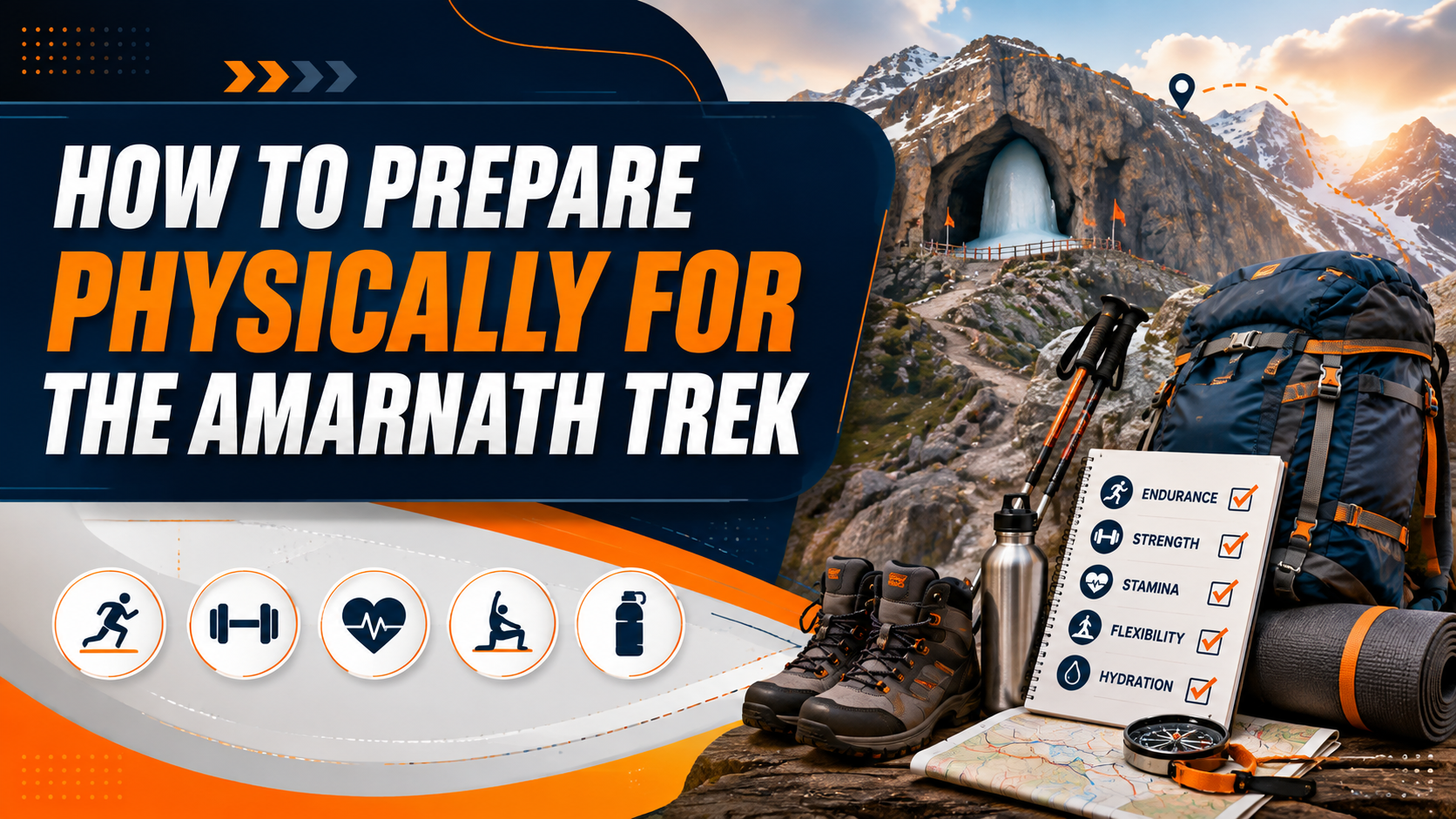
How to Prepare Physically for the Amarnath Trek
The Amarnath Yatra is a spiritually rewarding journey, but the high-altitude terrain, steep climbs, changing weather, and long walking hours make physical preparation essential. A well-planned Amarnath trek preparation routine can improve your stamina, strength, balance, and confidence before you begin the pilgrimage. Whether you are an experienced trekker or preparing for your first mountain journey, starting your fitness routine several weeks in advance can make the experience safer and more comfortable.
Why Physical Preparation Matters for the Amarnath Yatra
The Amarnath route involves prolonged walking through mountainous terrain at high altitude. You may encounter steep sections, uneven paths, cold temperatures, and reduced oxygen levels. These conditions can feel considerably more demanding than walking or exercising at sea level.
Good preparation helps your body handle sustained physical effort while reducing the likelihood of excessive fatigue, muscle soreness, or difficulty managing the route. Your goal should not be to become an athlete overnight, but to gradually build endurance and functional strength.
If you are planning your journey through an Amarnath Trek Package 2027, begin your fitness preparation well before your departure date.
Start Your Amarnath Trek Preparation Early
Ideally, begin training at least 6–8 weeks before the Yatra. If you have not exercised regularly, starting even earlier gives your body more time to adapt.
A gradual approach is important. Increasing your walking distance or workout intensity too quickly can cause injuries and leave you tired before the journey begins.
Build a Consistent Walking Routine
Walking is one of the simplest and most effective ways to prepare. Start with comfortable daily walks and progressively increase both distance and duration.
For example:
- Begin with 30–45 minutes of brisk walking.
- Gradually work toward 60–90 minutes.
- Include stairs, inclines, or uphill walking whenever possible.
- Take a longer walk once or twice a week.
- Practice walking while carrying a lightweight backpack.
The objective is to train your body to stay active for several hours without becoming excessively fatigued.
Practice on Inclines and Stairs
Flat-ground walking alone may not fully prepare your legs for a mountain pilgrimage. Add stair climbing, treadmill incline walking, or safe uphill routes to your routine.
Start with a manageable number of repetitions and increase them gradually. Stair exercises strengthen the thighs, calves, and glutes while improving cardiovascular endurance.
If you experience unusual pain, dizziness, or significant breathlessness, stop exercising and seek appropriate medical advice.
Strengthen Your Legs and Core
Endurance is important, but muscular strength also plays a major role in trekking. Strong legs can make climbing and descending easier, while a stable core helps maintain balance on uneven surfaces.
Useful Lower-Body Exercises
Include exercises such as:
- Squats
- Step-ups
- Lunges
- Calf raises
- Glute bridges
- Wall sits
You can begin with bodyweight exercises and gradually increase repetitions as your fitness improves. Step-ups are particularly useful because they closely resemble the repeated climbing motion involved in uphill trekking.
Don’t Ignore Your Core
A strong core can help you maintain better posture while walking and carrying a backpack. Add exercises such as planks, bird dogs, and controlled abdominal movements to your weekly routine.
You do not need an intense bodybuilding program. Functional exercises performed consistently are generally more useful for trekking preparation.
Improve Cardiovascular Endurance
High-altitude trekking can place greater demands on your cardiovascular system. Activities such as brisk walking, cycling, swimming, and jogging can help improve overall aerobic fitness.
Aim for regular cardiovascular activity rather than occasional intense workouts. The most important part of Amarnath trek preparation is consistency.
As your fitness improves, try to maintain moderate activity for longer periods. However, remember that good fitness does not completely prevent altitude-related problems. Acclimatization, hydration, pacing, and following local safety instructions remain important.
Train With Your Trekking Gear
One commonly overlooked part of preparation is getting used to the equipment you will actually use during the Yatra.
Before departure, practice walking in the shoes or trekking footwear you intend to wear. This gives you time to identify uncomfortable footwear and reduce the risk of blisters.
You should also practice with your backpack. Avoid carrying unnecessary weight, but gradually become comfortable with the essentials you will need during the journey.
Break In Your Footwear
Never rely on brand-new footwear for a long mountain trek. Wear your trekking shoes during training walks so your feet can adapt.
Choose footwear that provides a comfortable fit, sufficient grip, and appropriate support. Pair it with trekking socks that help manage moisture and reduce friction.
Practice Pacing and Breathing
One of the biggest mistakes beginners make is walking too fast at the beginning. Mountain trekking is about sustainable effort, not speed.
Maintain a comfortable pace that allows you to continue walking without becoming exhausted. Take short, regular breaks instead of waiting until you are completely tired.
Controlled breathing can also help you remain comfortable as the altitude increases. Focus on steady breathing and avoid unnecessarily pushing yourself during steep sections.
Prioritize Recovery, Nutrition, and Hydration
Training is only one part of effective Amarnath trek preparation. Your body also needs sufficient recovery.
Get adequate sleep and allow rest days between demanding workouts. Include balanced meals containing carbohydrates, protein, healthy fats, fruits, vegetables, and other nutrient-rich foods.
Stay properly hydrated during training and throughout the Yatra. At altitude, dehydration can contribute to fatigue and make physical exertion feel more difficult.
Avoid making drastic diet changes immediately before the pilgrimage. Instead, establish healthy eating and hydration habits during your preparation period.
Prepare for Altitude Responsibly
Physical fitness can improve your ability to handle exertion, but it cannot guarantee protection from altitude-related illness. The Amarnath route reaches significant elevation, so listen carefully to your body.
Symptoms such as severe headache, persistent vomiting, confusion, unusual difficulty breathing, or worsening weakness should never be ignored. Follow official instructions and seek medical assistance when necessary.
People with existing medical concerns should speak with a qualified healthcare professional before undertaking strenuous high-altitude travel.
A Simple Weekly Training Approach
A practical routine can combine endurance, strength, and recovery:
3–4 Days a Week
Brisk walking, incline walking, cycling, or another cardiovascular activity.
2–3 Days a Week
Lower-body and core strengthening exercises.
1 Day a Week
A longer walk that gradually increases in duration, preferably including stairs or inclines.
1–2 Recovery Days
Light stretching, easy walking, and adequate rest.
Adjust this schedule according to your current fitness level. The aim is steady progress rather than exhausting yourself before the Yatra.
Tips for Successful Amarnath Trek Preparation
Start early, increase your activity gradually, and focus on walking endurance rather than short bursts of intense exercise. Strengthen your legs and core, train with your footwear and backpack, stay hydrated, eat well, and give your body enough time to recover.
Most importantly, remember that preparation is about being ready for the demands of the journey—not proving how fast you can complete it. A sensible Amarnath trek preparation plan, combined with proper acclimatization and responsible trekking habits, can help you approach the Amarnath Yatra with greater confidence and comfort.
FAQs About Amarnath Trek Preparation
How many weeks should I prepare for the Amarnath trek?
Ideally, start around 6–8 weeks before the Yatra. Beginners or people who are not regularly active may benefit from starting earlier and progressing gradually.
Is walking enough for Amarnath trek preparation?
Walking is an excellent foundation, but adding stairs or incline training, lower-body strengthening, and core exercises can better prepare you for prolonged uphill and downhill movement.
Should I carry a backpack during training?
Yes. Once your basic walking fitness has improved, practice with a lightweight backpack similar to what you expect to carry during the Yatra. This helps your body adjust to walking with additional weight.
Can beginners prepare for the Amarnath Yatra?
Yes, many beginners can prepare by gradually improving their walking endurance and strength. However, the route can be physically demanding, so start training early and consider professional medical advice if you have concerns about strenuous or high-altitude activity.
What is the most important part of Amarnath trek preparation?
Consistency is key. Build endurance gradually, strengthen your legs and core, practice with your gear, maintain good hydration and nutrition, and allow sufficient recovery before the journey.
