

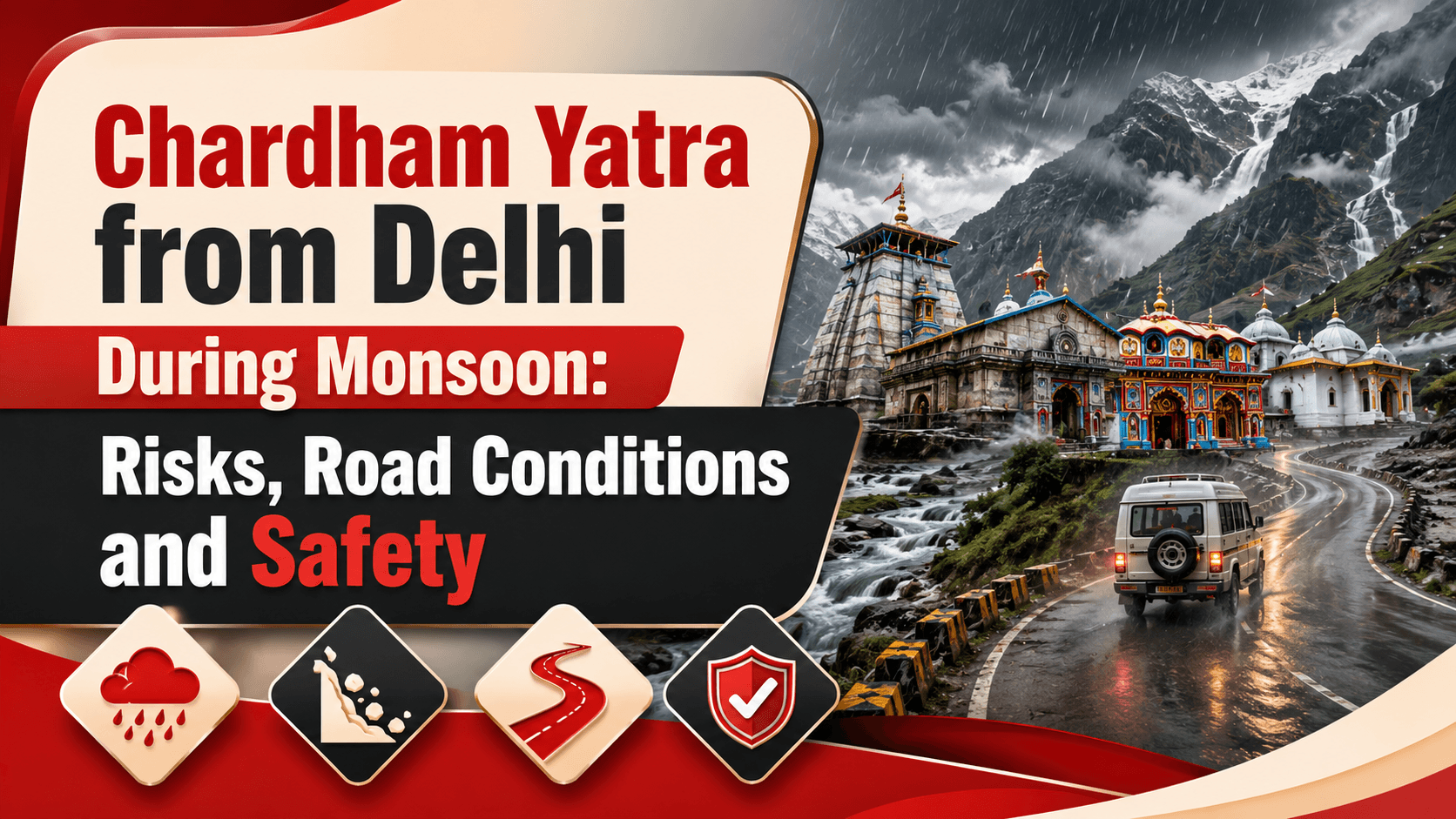
Chardham Yatra in Monsoon: What Delhi Travellers Should Know
Planning a Chardham Yatra in monsoon requires more preparation than travelling during the drier months. The journey from Delhi to Yamunotri, Gangotri, Kedarnath and Badrinath takes you through mountainous terrain where heavy rain can affect roads, visibility, travel time and trekking conditions. For travellers considering Chardham Yatra from Delhi monsoon travel, understanding the risks beforehand can make the pilgrimage safer and less stressful.
Monsoon does not automatically mean that the pilgrimage cannot be undertaken. However, conditions can change quickly in the Himalayan region. Rainfall may lead to slippery roads, falling rocks, landslides, waterlogging and temporary road restrictions. A flexible itinerary, experienced driver and regular weather and route checks are therefore especially important.
Why Chardham Yatra in Monsoon Needs Extra Planning
The Chardham route passes through steep mountain valleys and roads carved into slopes. During prolonged rainfall, soil and rocks can become unstable. Even when a road is open in the morning, conditions may change later in the day.
The biggest challenge is uncertainty. A journey that normally takes a particular number of hours can take significantly longer if traffic is stopped because of debris, road maintenance or weather conditions. Pilgrims should therefore avoid planning transfers with very tight schedules.
Another factor is the altitude. The four shrines are located in the Himalayan region, and weather can be considerably cooler and more unpredictable than in Delhi. Rain at lower elevations can also coincide with cold, wet conditions higher along the route.
What Are the Main Monsoon Risks?
Landslides and Falling Debris
Landslides are among the most important risks during monsoon travel in Uttarakhand. Heavy rainfall can loosen soil and rocks along mountain slopes, potentially blocking roads or creating hazardous driving conditions.
Some sections may remain open but still require extra caution. Drivers should maintain a safe speed, avoid unnecessary stops near unstable slopes and follow instructions from local authorities.
The Badrinath route, for example, includes mountainous sections where travellers are advised to check road conditions before proceeding. This is particularly relevant during rainy weather.
Slippery Mountain Roads
Rain can make mountain roads slippery, reducing tyre grip and increasing braking distance. Curves, narrow stretches and steep gradients require careful driving.
Travellers undertaking Chardham Yatra from Delhi monsoon travel should choose a vehicle and driver experienced with Himalayan roads rather than treating the journey like an ordinary highway trip.
Delays and Temporary Road Closures
A monsoon pilgrimage can involve unexpected delays. A road may be temporarily closed because of a landslide, debris clearance, heavy rainfall or safety concerns.
This is why adding buffer time to the itinerary is essential. Avoid making important onward travel or return arrangements dependent on reaching a particular destination at an exact time.
Reduced Visibility
Cloud, rain and fog can reduce visibility, especially at higher elevations. Driving after dark on unfamiliar mountain roads should generally be avoided when possible.
Starting journeys early and allowing sufficient daylight for mountain travel can provide a safer margin.
How Are Road Conditions During Chardham Yatra in Monsoon?
Road conditions can vary considerably from one section of the pilgrimage route to another. Main roads may be perfectly usable while a particular mountain section experiences a temporary disruption.
The official Uttarakhand tourism system provides route, registration and travel information, while the state’s tourism authorities also advise pilgrims to stay informed about weather and travel conditions. Road status should therefore be checked shortly before starting each major journey rather than relying only on information received several days earlier.
For a pilgrimage from Delhi, the practical approach is to treat travel time as an estimate rather than a guarantee. If rain is heavy, expect slower movement and possible waiting periods.
Safety Tips for Chardham Yatra from Delhi During Monsoon
Check Weather and Route Updates Every Day
Do not depend solely on the forecast checked before leaving Delhi. Mountain weather can change rapidly. Check current conditions before beginning each day’s journey and ask your accommodation or local travel operator about route conditions.
Keep Your Itinerary Flexible
A flexible schedule is one of the best protections against monsoon-related disruption. Keep spare time between important travel connections and avoid rushing simply to follow a fixed timetable.
Travel With an Experienced Driver
Mountain driving requires different skills from normal city or highway driving. An experienced driver understands sharp bends, gradients, narrow roads, traffic conditions and the importance of adjusting speed during rain.
Carry Appropriate Clothing
Pack a waterproof rain jacket, warm layers, comfortable walking shoes, extra socks and protection for important belongings. Even during summer and monsoon, temperatures can feel cold when clothes become wet.
Protect Medicines and Documents
Keep identity documents, medicines, registration details, mobile phones and other essentials in waterproof pouches. Carry necessary prescription medicines in sufficient quantity and keep them easily accessible.
Avoid Risky Stops
Do not stop unnecessarily below unstable slopes, close to waterfalls or beside fast-flowing streams. Avoid attempting to cross flooded sections on foot or by vehicle when authorities advise against it.
Keep Communication and Power Ready
Mobile connectivity can vary in mountainous areas. Carry a fully charged phone and power bank. It is also sensible to inform family members about your planned route and expected overnight stops.
Is Chardham Yatra in Monsoon Suitable for Families and Senior Citizens?
It depends on the individual’s health, mobility and ability to handle unpredictable travel conditions. Monsoon conditions can make the journey physically more demanding because of wet roads, delays, cold weather and longer travel times.
Families travelling with senior citizens should avoid rushing between destinations and should discuss the journey with a doctor when there are existing medical concerns. Regular rest, hydration, warm clothing and timely medical attention are important.
Travellers should also remember that Kedarnath involves a significant trek, making physical preparation particularly important.
How to Make Chardham Yatra from Delhi Safer
A well-organised itinerary can significantly reduce avoidable stress. Instead of trying to cover long distances quickly, plan reasonable driving periods and allow additional time for weather-related interruptions.
Pilgrims can also consider a professionally managed package where transportation, accommodation and route planning are coordinated. If you are looking for a structured itinerary, you can explore this Chardham pilgrimage from Delhi option.
Most importantly, never treat reaching a shrine on a particular day as more important than personal safety. If authorities restrict movement because of weather or road conditions, waiting is the safer decision.
Essential Monsoon Checklist Before Leaving Delhi
Before starting your journey, make sure your Chardham registration and required documents are ready. Uttarakhand’s official pilgrimage system requires pilgrims and vehicles to complete the applicable registration process.
Carry weatherproof luggage protection, suitable footwear, warm clothing, medicines, identification documents, a power bank and basic personal necessities. Keep some flexibility in your schedule for unexpected road delays.
It is also useful to save important travel and emergency information before entering areas where connectivity may be limited.
FAQs About Chardham Yatra in Monsoon
Is Chardham Yatra possible during monsoon?
Yes, the pilgrimage can be undertaken during the monsoon season, but travellers should be prepared for rain, slippery roads, landslides, delays and changing weather. Always check current weather and route conditions before travelling.
Is Chardham Yatra from Delhi safe during heavy rain?
Safety depends on current road and weather conditions. If authorities report unsafe roads, landslides or severe weather, pilgrims should postpone the affected journey rather than taking unnecessary risks.
What should I carry for Chardham Yatra in monsoon?
Carry waterproof outerwear, warm clothes, comfortable footwear, extra socks, medicines, identification documents, phone chargers or a power bank and waterproof protection for important belongings.
Can roads be closed during Chardham Yatra in monsoon?
Yes. Heavy rainfall, landslides, debris or other safety concerns can result in temporary road restrictions or closures. Travellers should check the latest route information before departing each day.
Should senior citizens travel to Chardham during monsoon?
Senior citizens can travel if they are physically fit and comfortable with the conditions, but monsoon travel requires additional caution. A slower itinerary, regular rest and medical preparedness are advisable.
A Chardham Yatra in monsoon can be spiritually rewarding, but it should never be approached like a routine road trip. Rain, landslides, slippery roads, reduced visibility and unexpected delays can affect the journey from Delhi to the Himalayan shrines.
The safest approach to Chardham Yatra from Delhi monsoon travel is to stay informed, keep the itinerary flexible, use experienced mountain drivers and respect weather and local safety instructions. With sensible planning and a willingness to adjust the schedule when conditions demand it, pilgrims can focus on the spiritual experience while reducing avoidable travel risks.
