

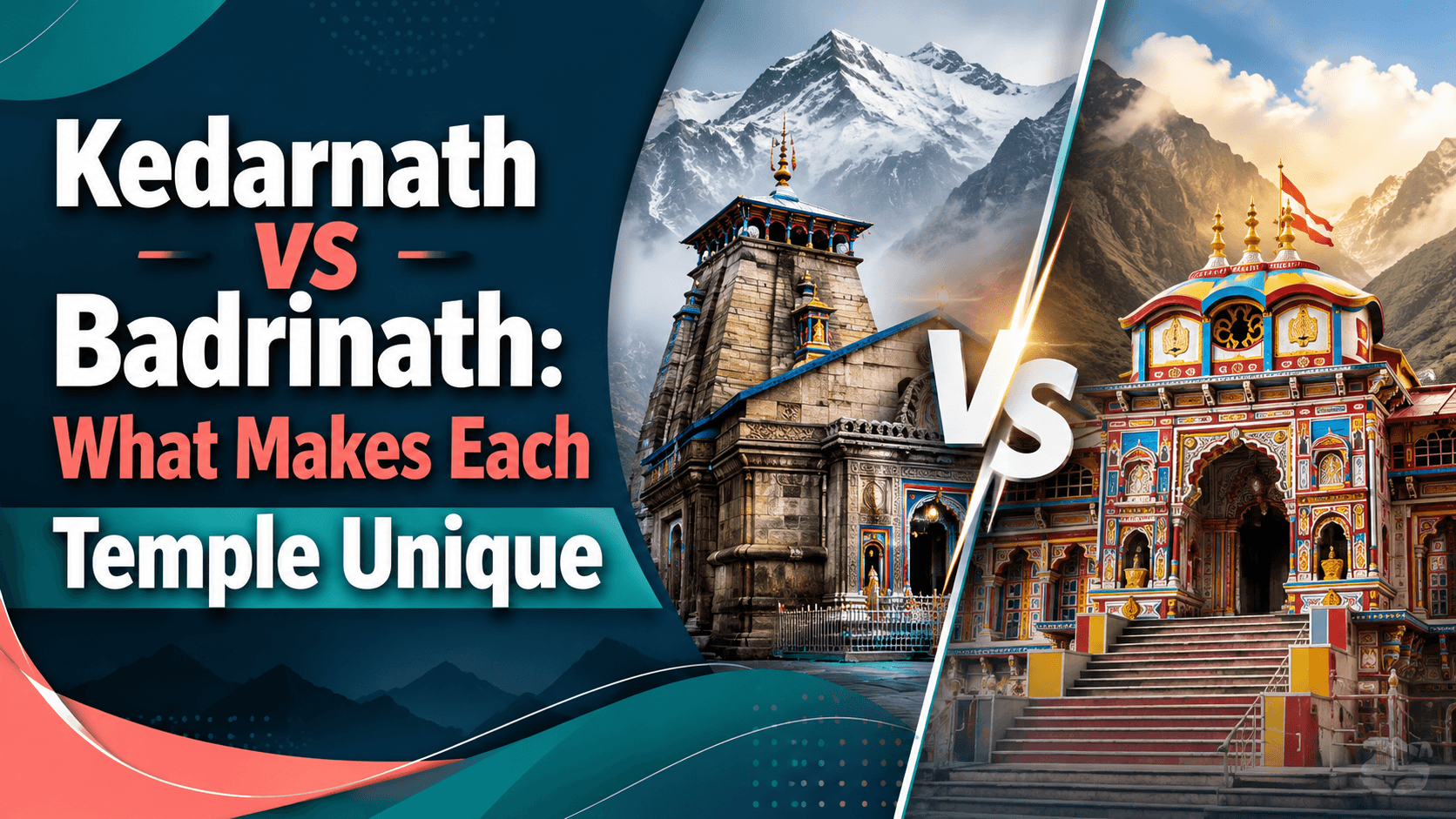
Kedarnath vs Badrinath: What Makes Each Temple Unique
Planning a Himalayan pilgrimage often begins with one important question: Kedarnath vs Badrinath—which temple should you visit, and what makes each one special? Both shrines are among the most revered pilgrimage destinations in India and attract millions of devotees every year. Although they are often included in the same journey, each temple has its own history, religious significance, landscape, and travel experience.
Understanding the differences between Kedarnath and Badrinath helps pilgrims plan a meaningful journey based on their interests, physical fitness, and spiritual goals. This guide explores everything you need to know before choosing between these iconic Himalayan temples.
Overview of Kedarnath and Badrinath
Kedarnath and Badrinath are two of the four sacred shrines of the Char Dham Yatra in Uttarakhand. Together, they also form the popular Do Dham pilgrimage.
Kedarnath is dedicated to Lord Shiva and is one of the twelve Jyotirlingas in India. Situated amidst snow-covered peaks, it offers a deeply spiritual experience combined with an adventurous trek.
Badrinath is dedicated to Lord Vishnu and is one of the 108 Divya Desams revered by Vaishnavites. It is more easily accessible and is known for its vibrant temple architecture and peaceful surroundings.
Kedarnath vs Badrinath: Major Differences
Primary Deity
The biggest distinction in the Kedarnath vs Badrinath comparison is the deity worshipped.
Kedarnath is dedicated to Lord Shiva, representing destruction and transformation in Hindu philosophy. Pilgrims visit seeking forgiveness, spiritual purification, and divine blessings.
Badrinath is dedicated to Lord Vishnu, the preserver of the universe. Devotees come to seek prosperity, peace, protection, and spiritual enlightenment.
Location and Natural Beauty
Kedarnath sits at an altitude of approximately 3,583 metres in the Rudraprayag district. Surrounded by towering Himalayan mountains and glaciers, the temple provides a dramatic and rugged landscape that leaves visitors in awe.
Badrinath is located at around 3,133 metres in the Chamoli district. The temple is beautifully positioned along the banks of the Alaknanda River with colourful mountain views and comparatively gentler surroundings.
Both locations are breathtaking, but Kedarnath offers a more remote and adventurous atmosphere, while Badrinath provides easier access and scenic tranquillity.
Accessibility
Accessibility is another significant difference.
Reaching Kedarnath requires travelling to Gaurikund, followed by a trek of around 16 kilometres. Pilgrims may also choose helicopter services, ponies, palkis, or porters depending on availability and physical capability.
Badrinath, on the other hand, is directly connected by motorable roads. Visitors can reach the temple almost entirely by vehicle, making it suitable for families, senior citizens, and those with limited mobility.
Temple Architecture
Kedarnath Temple features ancient stone construction designed to withstand the harsh Himalayan climate. Its simple yet majestic architecture reflects centuries of devotion and resilience.
Badrinath Temple stands out with its colourful façade, intricate wooden elements, and vibrant entrance. The architecture reflects traditional Garhwali influences while creating a welcoming spiritual environment.
Religious Importance
Importance of Kedarnath
Kedarnath is among the holiest Shiva temples in India and holds immense significance within Shaivism.
According to Hindu mythology, the Pandavas sought Lord Shiva here after the Mahabharata war to seek forgiveness for their sins. Lord Shiva appeared in the form of a bull before eventually revealing himself at Kedarnath.
Its status as one of the twelve Jyotirlingas makes it one of the most spiritually powerful pilgrimage destinations in the country.
Importance of Badrinath
Badrinath is one of the most important temples dedicated to Lord Vishnu.
Ancient scriptures state that Lord Vishnu meditated here while Goddess Lakshmi protected him in the form of a Badri tree. The temple is also associated with Adi Shankaracharya, who revived this sacred pilgrimage centuries ago.
As one of the Char Dham shrines and a Divya Desam, Badrinath attracts devotees from across the world.
Best Time to Visit
Both temples remain closed during winter because of heavy snowfall.
The pilgrimage season usually begins around April or May and continues until October or early November, depending on weather conditions.
May and June offer pleasant temperatures but witness large crowds.
September and October are excellent months for pilgrims seeking fewer crowds, clearer skies, and comfortable weather after the monsoon season.
Pilgrimage Experience
The pilgrimage experience differs significantly.
Kedarnath combines spirituality with physical endurance. The mountain trek, changing weather, and peaceful surroundings create a deeply transformative journey that many devotees describe as life-changing.
Badrinath provides a more relaxed pilgrimage. Since the temple is accessible by road, visitors can comfortably spend more time exploring nearby attractions such as Mana Village, Tapt Kund, Charan Paduka, and the scenic riverbanks.
Which Temple Is Better for First-Time Visitors?
When comparing Kedarnath vs Badrinath, neither temple is better—they simply offer different experiences.
If you enjoy adventure, mountain trekking, and intense spiritual immersion, Kedarnath may be the ideal choice.
If you prefer easier accessibility, family-friendly travel, and peaceful temple visits, Badrinath is an excellent option.
Many pilgrims choose not to decide between the two and instead complete both temples in one spiritual journey. Those planning a convenient pilgrimage can consider the Do Dham Yatra from Delhi for a well-organised travel experience.
Travel Planning Tips
Carry Warm Clothing
Even during summer, temperatures can fall considerably, especially in Kedarnath. Layered clothing, gloves, caps, and waterproof jackets are highly recommended.
Register Before Travelling
Pilgrims should complete the required Yatra registration before departure, as registration is mandatory during the pilgrimage season.
Stay Hydrated
High-altitude travel can be physically demanding. Drink enough water, eat light meals, and allow time for acclimatisation.
Check Weather Conditions
Mountain weather changes rapidly. Always verify road conditions and weather forecasts before beginning your journey.
Frequently Asked Questions
Is Kedarnath harder to reach than Badrinath?
Yes. Kedarnath requires a 16-kilometre trek from Gaurikund or the use of helicopter or pony services. Badrinath is directly accessible by road.
Can both temples be visited in one trip?
Yes. Thousands of pilgrims complete both shrines together as part of the Do Dham Yatra, making it a convenient and spiritually fulfilling pilgrimage.
Which temple is older?
Both temples have ancient origins rooted in Hindu mythology. While historical reconstruction has occurred over centuries, each shrine carries immense religious and cultural significance.
Is Kedarnath or Badrinath better for elderly travellers?
Badrinath is generally more suitable for elderly visitors because it is accessible by road and requires minimal walking compared to Kedarnath.
How many days are required for a Do Dham pilgrimage?
Most Do Dham itineraries take between five and seven days, depending on the starting location, weather conditions, and mode of transportation.
The discussion of Kedarnath vs Badrinath is not about choosing one temple over the other but understanding the unique spiritual experience each offers. Kedarnath inspires devotion through its remote Himalayan setting, sacred Shiva temple, and challenging pilgrimage route. Badrinath welcomes devotees with its serene atmosphere, rich Vishnu traditions, and easy accessibility.
Whether you are seeking adventure, inner peace, or a deeper connection with your faith, both destinations offer unforgettable experiences. Understanding the differences in Kedarnath vs Badrinath allows you to plan a pilgrimage that matches your spiritual aspirations while appreciating the timeless heritage of these two revered Himalayan shrines.
