

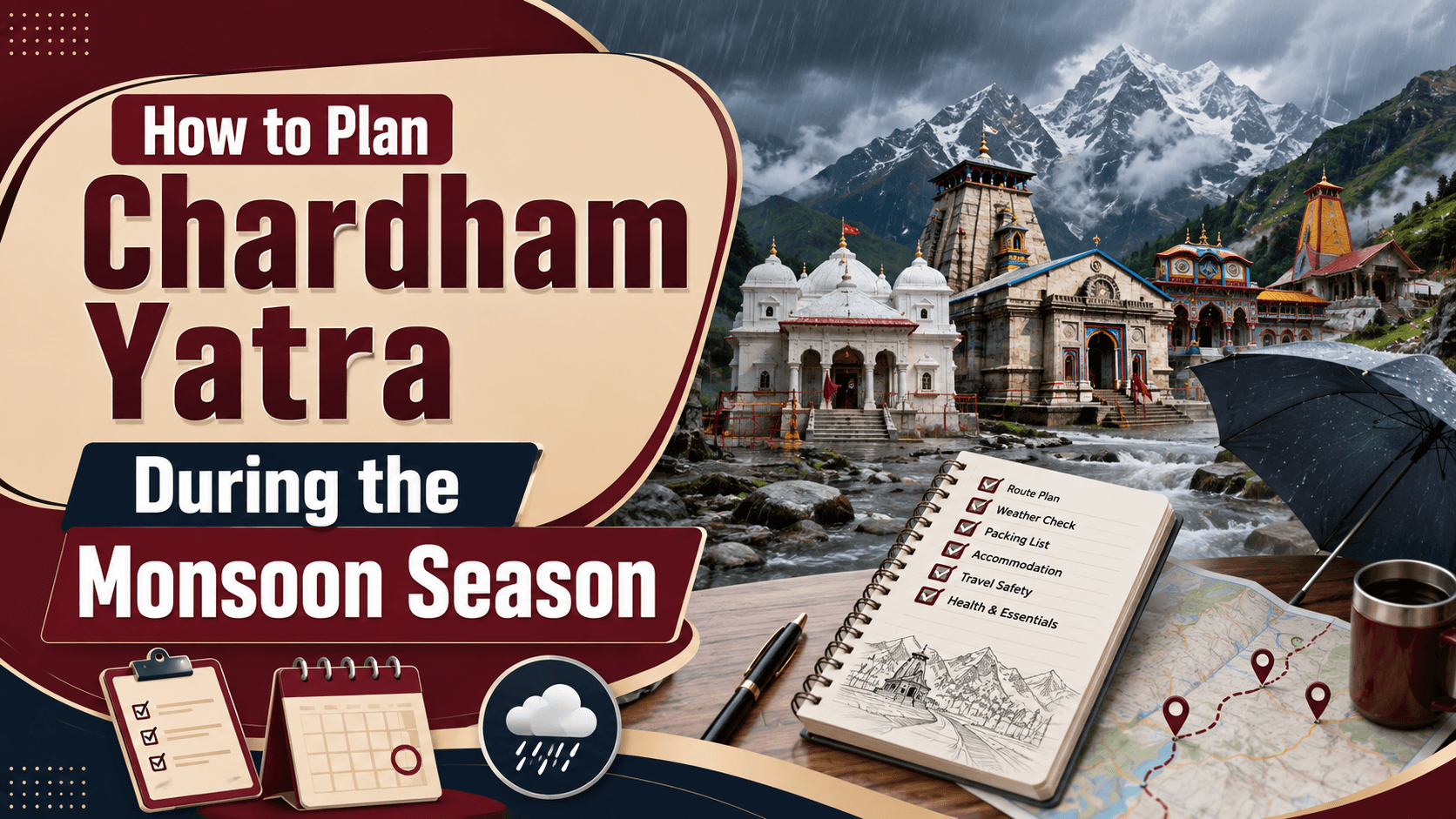
How to Plan Chardham Yatra in Monsoon: A Complete Planning Guide
Planning a pilgrimage to the sacred Char Dham of Uttarakhand requires careful preparation, especially when travelling during the rainy season. The Chardham Yatra in monsoon can be spiritually rewarding, but heavy rainfall may bring slippery roads, landslides, traffic delays, and sudden weather changes. With the right planning, flexible scheduling, suitable clothing, and safety precautions, pilgrims can make their journey more comfortable and organized.
The four revered destinations—Yamunotri, Gangotri, Kedarnath, and Badrinath—are located in the Himalayan region, where weather conditions can change quickly. Therefore, monsoon Chardham Yatra planning should focus not only on sightseeing and accommodation but also on road conditions, travel time, health, and emergency preparedness.
Why Monsoon Requires Extra Planning for Chardham Yatra
The monsoon season generally brings frequent rainfall to Uttarakhand. Mountain roads can become slippery, visibility may decrease, and landslides can temporarily affect transportation routes. Even when the weather appears clear at the starting point, conditions can be different at higher elevations.
For pilgrims, this means a fixed and tightly packed itinerary may not always be practical. A better approach is to keep some flexibility in the schedule and allow additional travel time between destinations.
During Chardham Yatra in monsoon, it is particularly important to check weather and road conditions before beginning each major journey. Avoid making last-minute decisions based solely on clear weather in the morning.
Choose the Right Travel Schedule
One of the most important aspects of monsoon Chardham Yatra planning is selecting a realistic itinerary. The traditional pilgrimage route covers considerable distances through mountainous terrain, so rushing between destinations can make the journey tiring and stressful.
A well-planned itinerary should include sufficient time for:
- Travel between major pilgrimage destinations
- Darshan and temple visits
- Weather-related delays
- Rest and acclimatization
- Possible changes in road or transport conditions
Pilgrims travelling with senior citizens, children, or people who are not accustomed to mountain travel should consider an itinerary with additional rest time.
If you prefer a structured pilgrimage package, you can explore the Chardham Yatra from Haridwar for a planned route and organized travel experience.
Check Weather and Road Conditions Before Every Journey
Mountain weather can change rapidly, making daily travel planning essential. Before leaving your hotel or travel stop, check the latest available weather information and confirm whether the route ahead is suitable for travel.
Do not assume that a route will remain open simply because it was accessible the previous day. Rainfall can cause temporary road closures or slow-moving traffic.
For Chardham Yatra in monsoon, keep your itinerary flexible enough to accommodate unexpected delays. If authorities, local officials, drivers, or tour operators advise against travelling on a particular route, prioritize safety over maintaining the original schedule.
Pack Proper Clothing and Rain Protection
Packing correctly can make a major difference to your comfort during a monsoon pilgrimage. Lightweight clothing that dries quickly is preferable to heavy cotton garments that remain wet for long periods.
Carry a waterproof raincoat or poncho, an umbrella where practical, and waterproof covers for bags and important belongings. Comfortable footwear with good grip is especially useful because walking surfaces can become wet and slippery.
Essential items may include:
- Waterproof rain jacket or poncho
- Quick-drying clothes
- Comfortable footwear with good traction
- Extra socks
- Small waterproof backpack or rain cover
- Personal medicines and basic first-aid supplies
- Water bottle
- Torch or headlamp
- Power bank
- Identity and travel documents stored in waterproof packaging
Avoid overpacking. A lighter bag is easier to manage during walks, transfers, and accommodation changes.
Be Prepared for Trekking and Walking
Yamunotri and Kedarnath involve significant walking or trekking, and monsoon conditions can make these sections more challenging. Wet surfaces, mud, and uneven paths may increase the risk of slipping.
Start your physical preparation before the trip if your normal routine does not involve much walking. Regular walking and moderate exercise can help improve stamina.
During the journey, maintain a comfortable pace instead of trying to reach the destination quickly. Take breaks whenever required and stay hydrated.
For elderly pilgrims or travellers with limited mobility, discuss transportation and assistance options with the tour operator before departure.
Protect Your Health During the Monsoon
The combination of rain, cold temperatures, long travel hours, and high-altitude locations can make the pilgrimage physically demanding.
Eat fresh and hygienically prepared food and drink safe water. Keep your body warm after getting wet, and avoid staying in damp clothing for extended periods.
Travellers should carry their regular medicines and any essential prescriptions. It is also useful to keep basic medicines and first-aid supplies easily accessible rather than buried inside luggage.
If you experience unusual breathing difficulty, severe fatigue, dizziness, persistent vomiting, or other concerning symptoms at altitude, do not ignore them. Inform your travel companions and seek appropriate medical assistance.
Keep Extra Time for Unexpected Delays
One of the biggest mistakes in monsoon Chardham Yatra planning is creating an itinerary with no buffer time. Mountain travel does not always follow the same schedule as travel in plains.
Heavy rain, traffic congestion, road maintenance, or temporary route restrictions can delay a journey. If your return journey involves a flight or train from a nearby city, avoid scheduling it immediately after the final pilgrimage stop.
Keeping an extra day or reasonable buffer between important connections can reduce stress and provide greater flexibility.
Travel With a Reliable Tour Operator
A knowledgeable local travel partner can be particularly useful during the monsoon season. Experienced operators understand the practical challenges of Himalayan travel and can help coordinate transportation, accommodation, route planning, and itinerary adjustments.
When selecting a Chardham package, look beyond the price. Check what transportation, accommodation, meals, transfers, and itinerary support are included. Ask how the operator handles delays or route disruptions caused by weather.
A reliable travel arrangement can make Chardham Yatra in monsoon more organized and comfortable, particularly for first-time pilgrims.
Important Safety Tips for Monsoon Chardham Yatra
Safety should always take priority over completing the itinerary exactly as planned. Avoid travelling through restricted areas or attempting to cross unsafe roads and streams during heavy rainfall.
Stay with your group, follow instructions from local authorities, and avoid unnecessary walking near unstable slopes. Keep your phone charged and maintain communication with your travel coordinator.
It is also wise to keep copies of important documents, emergency contact details, and booking information in both physical and digital formats.
FAQs About Chardham Yatra in Monsoon
Is Chardham Yatra safe during the monsoon?
The pilgrimage can be undertaken during the monsoon, but weather and road conditions can change quickly. Safety depends on current conditions, route accessibility, and responsible travel decisions. Pilgrims should monitor weather updates, follow local instructions, and keep their itinerary flexible.
What should I pack for a monsoon Chardham Yatra?
Pack waterproof rain protection, quick-drying clothes, extra socks, comfortable non-slip footwear, personal medicines, a power bank, a water bottle, identification documents, and waterproof covers for luggage and electronics.
Should I keep extra days in my itinerary?
Yes. Buffer days are highly recommended when travelling in the Himalayan region during the rainy season. Delays caused by rainfall, traffic, road conditions, or temporary route restrictions can affect the original schedule.
Is monsoon suitable for senior citizens?
Senior citizens can travel with suitable preparation, but they should consider their fitness level, walking requirements, altitude, and weather conditions. A slower itinerary with adequate rest and reliable transportation is generally more comfortable.
How can I make monsoon Chardham travel more comfortable?
Plan realistic daily travel times, carry proper rain protection, use suitable footwear, stay hydrated, monitor weather conditions, and avoid rushing between destinations. Choosing an experienced tour operator can also simplify transportation and itinerary management.
A successful Chardham Yatra in monsoon depends on preparation, flexibility, and respect for Himalayan weather conditions. Rain should not automatically discourage pilgrims, but it does require a more careful approach to transportation, packing, health, accommodation, and daily scheduling.
With sensible monsoon Chardham Yatra planning, adequate buffer time, suitable clothing, reliable travel arrangements, and a safety-first mindset, pilgrims can focus more comfortably on the spiritual significance of Yamunotri, Gangotri, Kedarnath, and Badrinath. The key is to remain flexible and prioritize safety whenever weather or road conditions become challenging.
