

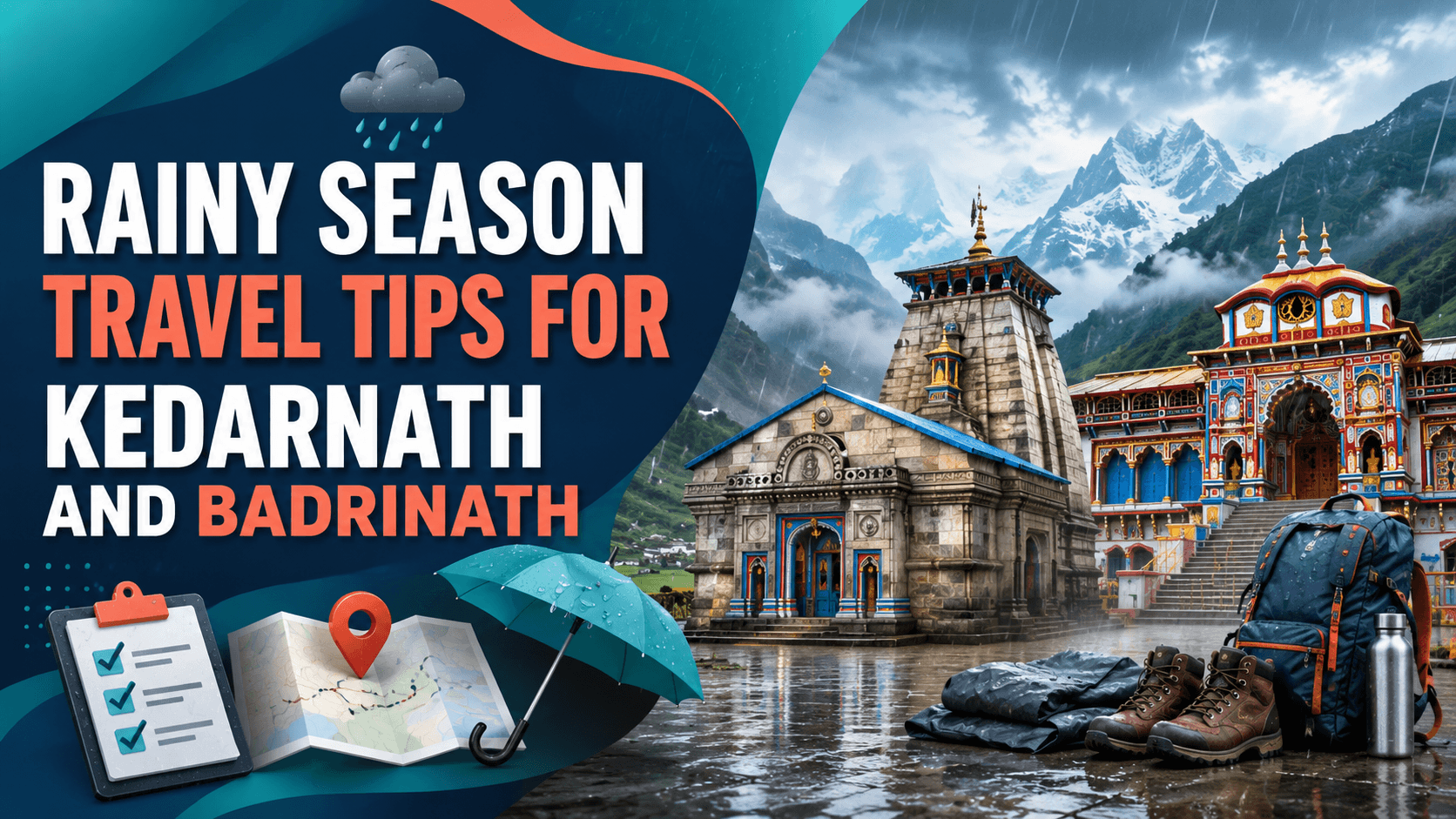
A pilgrimage to Kedarnath and Badrinath during the monsoon requires more preparation than a journey during the dry months. Heavy rainfall can affect mountain roads, trekking conditions, visibility, transportation, and travel schedules. However, with careful planning and a flexible itinerary, pilgrims can still enjoy a meaningful journey. These Rainy Season Do Dham Yatra Tips will help you prepare for changing weather, manage travel risks, and make your Kedarnath and Badrinath pilgrimage more comfortable.
The rainy season can bring lush green valleys, flowing waterfalls, and a refreshing mountain atmosphere, but Himalayan weather can change quickly. Before beginning your journey, check the latest weather conditions, road status, local advisories, and temple-related travel information.
Why Monsoon Requires Extra Planning for Do Dham Yatra
During the rainy season, Uttarakhand can experience intense showers, slippery roads, falling rocks, waterlogging, and temporary road closures. Mountain routes are particularly sensitive to heavy rainfall, so travel times may become longer than expected.
For a Rainy Season Do Dham Yatra, it is important not to plan every day around a strict timetable. Keep some flexibility in your schedule so that an unexpected delay does not create unnecessary pressure. Starting early in the day is also generally helpful because weather and road conditions can become more difficult later.
Travelers should also keep their accommodation and transportation arrangements organized in advance, particularly during busy pilgrimage periods.
Check Weather and Road Conditions Before Departure
One of the most important Rainy Season Do Dham Yatra Tips is to check conditions immediately before starting the journey. Do not rely only on a weather forecast checked several days earlier.
Rainfall in the hills can vary considerably from one location to another. A clear morning at one destination does not necessarily mean that the route ahead will remain clear throughout the day.
Before leaving for the next destination, check:
- Current and expected rainfall
- Mountain road and highway conditions
- Landslide or route closure alerts
- Local administration advisories
- Transportation availability
- Temple and pilgrimage registration requirements
If authorities advise against traveling on a particular route, follow the instructions rather than taking unnecessary risks.
Pack Smart for Kedarnath and Badrinath
Appropriate clothing and footwear can make a major difference during a monsoon pilgrimage. Pack lightweight clothes that dry relatively quickly and carry a reliable waterproof rain jacket or poncho.
For Kedarnath, comfortable trekking shoes with good grip are particularly important because wet paths can become slippery. Avoid relying on ordinary casual footwear for long walks.
Your essential packing should include:
- Waterproof jacket or poncho
- Quick-drying clothes
- Warm layers for colder conditions
- Comfortable trekking shoes with strong grip
- Waterproof covers for bags and electronics
- Small personal first-aid kit
- Necessary medicines and prescriptions
- Reusable water bottle
- Torch or headlamp
- Power bank
- Extra socks
- Identification documents and required travel permits
A waterproof backpack cover or dry bags can protect important belongings from sudden rain.
Be Careful on Mountain Roads
Road travel is one of the biggest concerns during a Rainy Season Do Dham Yatra. Heavy rain can make roads slippery and may increase the possibility of landslides or falling debris in vulnerable areas.
Avoid rushing your driver because you want to reach a destination at a particular time. Safe driving should always take priority over maintaining a fixed schedule.
If rainfall becomes intense, stopping at a safe location may be wiser than continuing through a difficult stretch. Travelers should also avoid standing near unstable slopes, riverbanks, or areas where rocks and debris may fall.
When using shared transportation, keep essential belongings close to you and make sure you know where your accommodation is located before arriving at a destination.
Prepare Properly for the Kedarnath Trek
The Kedarnath section requires additional attention because the pilgrimage involves walking through mountainous terrain. Rain can make the trail wet and slippery, while changing temperatures can make physical exertion more demanding.
Walk at a comfortable pace and take regular breaks. Do not underestimate the impact of altitude, cold weather, rain, and a long walking distance combined.
Carry only what you genuinely need during the trek. A heavy backpack can make the journey considerably harder. Keep valuables and electronic devices protected in waterproof pouches.
If you experience unusual weakness, dizziness, breathing difficulty, or severe discomfort, stop and seek appropriate assistance rather than trying to push through the journey.
Keep Your Itinerary Flexible
A flexible itinerary is among the most practical Rainy Season Do Dham Yatra Tips. Mountain travel does not always follow the same timetable as city travel.
A road may temporarily close because of rainfall, or transportation may be delayed due to weather conditions. Building buffer time into your itinerary can help you deal with these situations without missing important travel arrangements.
Instead of scheduling every activity tightly, leave extra time between major destinations. Keep your accommodation bookings, transportation details, identification documents, and emergency contacts easily accessible.
If you are traveling from Delhi, choosing a professionally arranged pilgrimage itinerary can also simplify transportation and accommodation planning. You can explore the Do Dham Yatra Package from Delhi for a more organized approach to the journey.
Take Care of Food, Water, and Personal Health
Rainy weather can make travelers more vulnerable to fatigue and digestive discomfort. Eat freshly prepared food from reliable establishments and avoid consuming food or water when its hygiene is uncertain.
Drink sufficient water throughout the day, particularly during the Kedarnath trek. At higher elevations, travelers may not always feel thirsty even when their body needs fluids.
Carry basic medicines that you normally require, along with any prescribed medication. Keep medicines protected from moisture.
Rest is equally important. Do not try to cover too many destinations or activities in a single day simply to follow an ambitious itinerary.
Keep Important Documents and Electronics Dry
Rain can arrive unexpectedly, so protecting documents and electronic devices should be part of your Rainy Season Do Dham Yatra preparation.
Store identification documents, booking confirmations, permits, cash, and other important papers inside waterproof pouches. Smartphones and power banks should also be protected from moisture.
It is useful to keep digital copies of important documents in secure storage, while carrying the required physical documents separately in a waterproof folder.
What to Do If Your Journey Is Delayed
Unexpected delays are possible during monsoon travel. If a road becomes temporarily inaccessible, remain patient and follow official instructions.
Do not attempt unknown shortcuts or isolated mountain routes simply to save time. If your transportation is delayed, contact your hotel, tour operator, or travel coordinator and update your plans.
A delayed arrival is inconvenient, but taking unnecessary risks in unstable weather can be far more serious. This is why a little additional time in your itinerary can be extremely valuable.
FAQs About Rainy Season Do Dham Yatra
Is Do Dham Yatra safe during the rainy season?
A Do Dham Yatra during the monsoon requires additional caution because heavy rain can affect roads, trekking paths, and visibility. Safety depends on current weather and local conditions. Check official advisories before traveling and follow instructions from local authorities. Avoid traveling through routes that have been closed or declared unsafe.
What should I carry for Kedarnath during monsoon?
Carry waterproof outerwear, quick-drying clothes, warm layers, strong-grip trekking shoes, extra socks, waterproof bags, personal medicines, identification documents, and essential electronics protection. A lightweight backpack is preferable for the trek. Avoid carrying unnecessary items because a heavy bag can make the uphill journey more tiring.
Can heavy rain affect the Kedarnath and Badrinath route?
Yes. Heavy rainfall can cause temporary road closures, landslides, falling debris, traffic disruptions, and delays in mountainous areas. Conditions can change quickly, so travelers should check road and weather updates before starting each day’s journey. Keeping buffer days in the itinerary is strongly recommended during the monsoon.
Is it necessary to start early during a monsoon pilgrimage?
Starting early can be helpful because it provides more daylight for travel and gives you additional time to handle unexpected delays. However, departure should always depend on current road and weather conditions. If authorities recommend delaying travel because of dangerous weather, safety should take priority over an early start.
How can I make a monsoon Do Dham trip more comfortable?
Pack waterproof clothing, comfortable footwear, warm layers, dry bags, essential medicines, and enough personal supplies. Keep your schedule flexible and allow extra travel time. Stay informed about weather and road conditions, take adequate rest, eat safely, and avoid rushing through difficult mountain routes.
A well-prepared Rainy Season Do Dham Yatra can be a memorable spiritual experience, but monsoon conditions demand patience, flexibility, and sensible planning. From checking weather and road updates to carrying waterproof clothing and suitable trekking shoes, small preparations can significantly improve your journey.
The most important Rainy Season Do Dham Yatra Tips are to respect changing Himalayan weather, keep your itinerary flexible, follow official safety instructions, and avoid taking unnecessary risks. With thoughtful preparation and a safety-first approach, your Kedarnath and Badrinath pilgrimage can remain comfortable, organized, and spiritually rewarding.
