

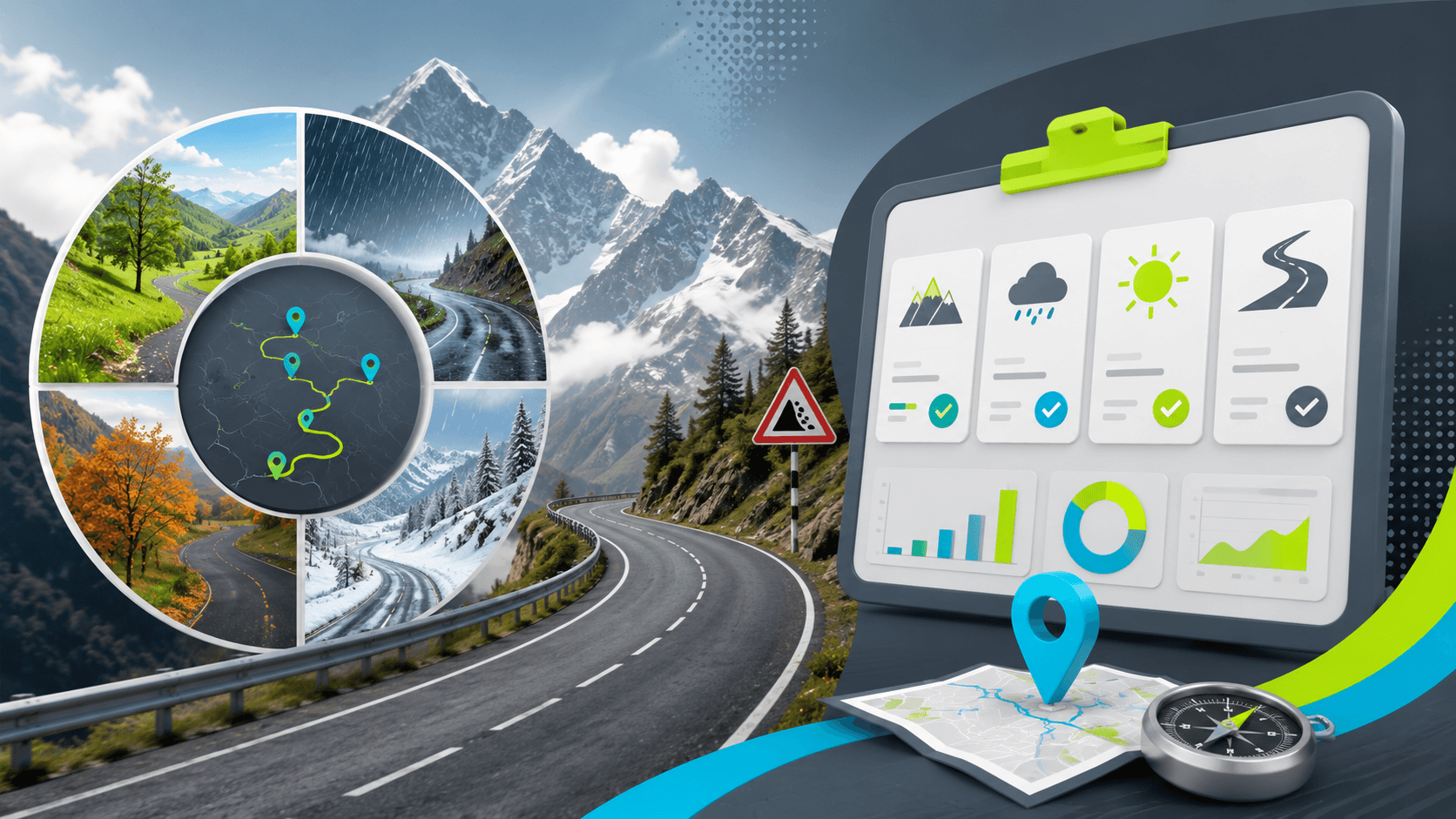
Planning a pilgrimage to the sacred shrines of Yamunotri, Gangotri, Kedarnath, and Badrinath requires more than choosing travel dates. Understanding chardham road conditions before your journey can help you travel safely, avoid unnecessary delays, and enjoy a smoother experience in the Himalayas. Since the Char Dham route passes through mountainous terrain, road conditions vary significantly with changing weather and seasonal factors.
This guide explains how the roads change throughout the pilgrimage season, what travelers should expect, and how to prepare for different travel conditions along the route.
Why Chardham Road Conditions Change During the Season
The Char Dham circuit passes through steep mountain roads, river valleys, forest stretches, and high-altitude regions. Weather plays a major role in determining road quality and travel time.
Heavy rainfall, occasional landslides, ongoing road improvement projects, and snowfall during colder months can temporarily affect accessibility. Government agencies continuously work to maintain the roads, but travelers should remain prepared for changing mountain conditions.
Knowing the Chardham Route Road Conditions before departure helps pilgrims plan realistic travel schedules and travel more confidently.
Road Conditions During the Early Season (April to May)
The pilgrimage generally begins in late April or early May after the temple doors open.
During this period:
- Roads are freshly maintained after winter.
- Weather remains pleasant in most locations.
- Mountain views are clear.
- Traffic gradually increases as the yatra gains momentum.
Although chardham road conditions are generally good during this season, some higher-altitude stretches may still have loose gravel due to snow clearance operations. Early morning temperatures can also remain quite low.
This period is considered one of the most comfortable times for road travel.
Road Conditions During Peak Summer (May to June)
May and June attract the highest number of pilgrims.
Travelers should expect:
Heavy Traffic
Popular stretches near Rishikesh, Srinagar, Rudraprayag, Guptkashi, Joshimath, and Uttarkashi often experience congestion.
Road Improvement Work
Authorities frequently continue widening and strengthening roads to improve long-term accessibility. Temporary diversions or one-way traffic management may be implemented.
Longer Travel Times
Even when roads remain open, traffic volume can significantly increase journey duration.
Overall, chardham road conditions remain suitable for travel, but starting early each morning helps avoid delays.
Road Conditions During the Monsoon Season (July to August)
The monsoon season presents the most challenging driving conditions.
Heavy rainfall may lead to:
Landslides
Mountain slopes occasionally experience landslides that temporarily block traffic until debris is cleared.
Falling Rocks
Certain steep sections become vulnerable to loose rocks after continuous rainfall.
Waterlogging
Some low-lying road sections may collect rainwater, slowing traffic.
Temporary Closures
Authorities may temporarily stop vehicle movement when weather conditions become unsafe.
Because weather changes rapidly in the mountains, travelers should remain flexible with their schedules.
If your trip falls during this period, monitoring local travel advisories becomes especially important, as Chardham Route Road Conditions can change within a few hours.
Road Conditions During September and October
After the monsoon ends, road travel improves considerably.
Advantages include:
- Cleaner roads after maintenance.
- Pleasant daytime weather.
- Reduced traffic compared to summer.
- Better visibility for mountain driving.
Many experienced travelers consider September and October among the best months for the pilgrimage because chardham road conditions become more stable while the scenery is exceptionally beautiful.
However, temperatures begin dropping, especially in Kedarnath and Badrinath, so warm clothing remains essential.
Important Route-Wise Road Overview
Haridwar to Barkot (Yamunotri Route)
This route includes winding mountain roads after Dehradun. Most sections are well-connected, although occasional maintenance work may slow traffic during busy periods.
Barkot to Janki Chatti
Roads become narrower as elevation increases. Drivers should be experienced in hill driving.
Uttarkashi to Gangotri
This scenic route follows the Bhagirathi River and generally remains in good condition. Certain stretches may become slippery during rainfall.
Guptkashi to Sonprayag
This route experiences heavy pilgrim movement during the Kedarnath season. Traffic management measures are common.
Joshimath to Badrinath
This mountain stretch includes sharp curves and narrow sections but is regularly maintained. Weather conditions largely determine travel speed.
Understanding these route-specific details provides a better picture of overall chardham road conditions during your journey.
Practical Tips for Safe Road Travel
Start Early
Morning travel reduces the chances of encountering traffic congestion and afternoon weather changes.
Keep Extra Travel Time
Mountain roads often take longer than expected. Avoid planning tightly packed schedules.
Follow Local Instructions
Traffic authorities may temporarily regulate vehicle movement depending on weather and road maintenance activities.
Carry Essentials
Keep drinking water, medicines, snacks, warm clothing, rain protection, and a power bank during road journeys.
Drive Carefully
Avoid speeding on mountain roads. Maintain safe distances and stay alert around blind curves.
Should You Worry About Road Conditions?
Most pilgrims successfully complete the Char Dham Yatra every year. While mountain roads naturally present certain challenges, continuous infrastructure improvements have made travel more comfortable than in previous years.
The key is realistic planning rather than worrying about every possible obstacle. Understanding chardham road conditions, choosing an appropriate travel season, and allowing flexibility in your itinerary significantly improve the overall pilgrimage experience.
Traveling with an organized package can also simplify transportation, accommodation, and daily planning. If you are planning your pilgrimage, you can explore the Chardham Yatra from Haridwar package for a well-planned journey covering all four sacred shrines.
Frequently Asked Questions
Are Chardham roads safe for cars?
Yes. Most roads are suitable for cars and larger vehicles during the pilgrimage season. Drivers should have experience driving on mountain roads and always follow local traffic advisories.
Which season has the best road conditions?
Generally, May, June, September, and October offer the most favorable travel conditions. September and October often provide smoother driving after the monsoon season.
Do landslides happen every year?
Some landslides may occur during heavy rainfall, particularly in the monsoon months. Road maintenance teams usually work quickly to restore traffic whenever conditions allow.
Can I drive my own vehicle on the Char Dham route?
Yes. Many pilgrims travel in their own vehicles. Ensure your vehicle is well serviced, carry necessary documents, and be prepared for mountain driving conditions.
Does weather affect travel time?
Yes. Rain, fog, snowfall, traffic, and road maintenance work can all increase travel time. Keeping flexible schedules is always recommended for Himalayan journeys.
A successful pilgrimage begins with proper preparation, and understanding chardham road conditions is one of the most important parts of planning. Road quality varies throughout the season due to weather, traffic, and ongoing maintenance, but most routes remain accessible with careful planning. Whether you travel during early summer or after the monsoon, staying informed about Chardham Route Road Conditions allows you to enjoy a safer, more comfortable, and spiritually fulfilling journey through the sacred Himalayas.
